

 1 day ago
12
1 day ago
12
PROTECT YOUR DNA WITH QUANTUM TECHNOLOGY
Orgo-Life the new way to the future Advertising by AdpathwayFemale mice that spent six weeks aboard the International Space Station came home able to reproduce, but their offspring and grand-offspring showed measurable reproductive changes, according to a study that is drawing new attention as NASA plans longer missions to the Moon and eventually Mars. The research, led by Lane Christenson of the University of Kansas Medical Center with collaborators including scientists at NASA's Ames Research Center, was published June 30, 2026, in the Proceedings of the National Academy of Sciences.
The daughters of the space-flown mice had fewer and much smaller litters, weaker muscles, and lower levels of a hormone linked to egg supply. The granddaughters also showed lower levels of that hormone. Whether anything similar happens in people is unknown.
The study matters because human spaceflight is moving beyond low Earth orbit. Under NASA's Artemis program, astronauts are expected to travel farther from Earth, and scientists know relatively little about how extended spaceflight affects female reproductive health or later generations.
Changes Across Two Later Generations
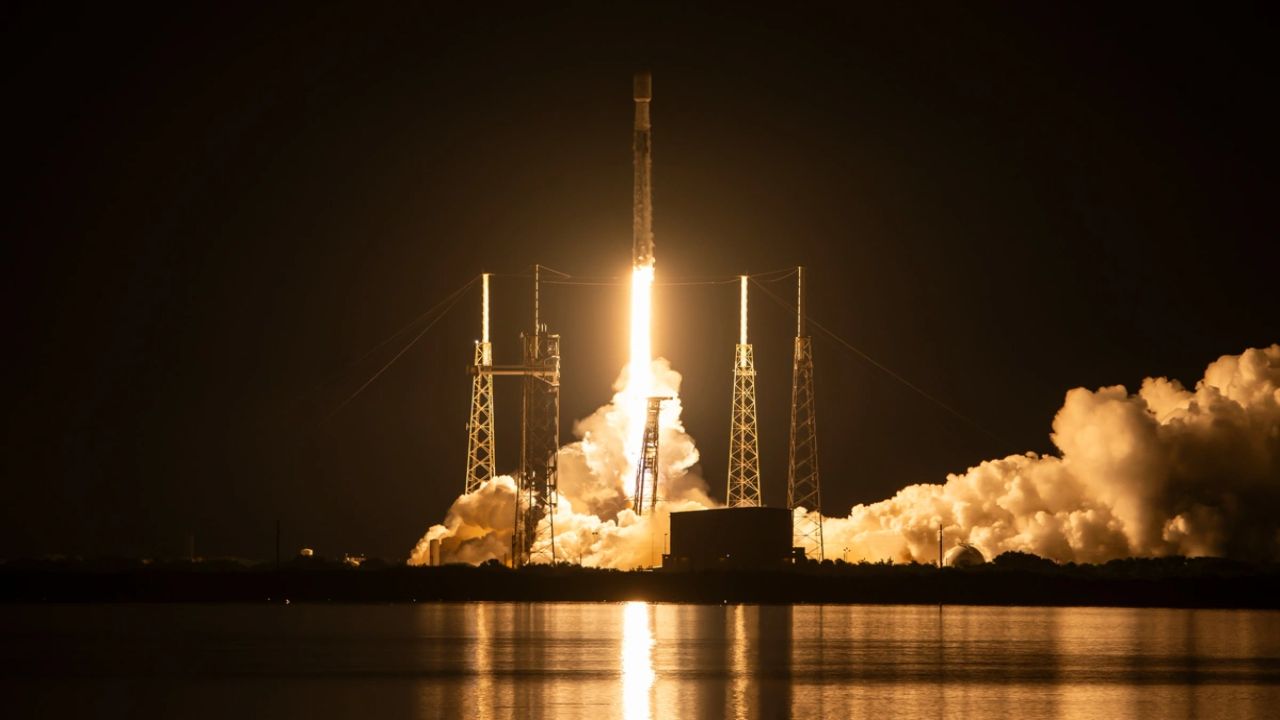
For the study, 20 female mice lived on the ISS for 42 days after launching on NASA's SpaceX CRS-29 resupply mission in November 2023. After their return, they were mated, and researchers compared them and their descendants with mice that stayed on the ground.
The space-flown mothers could still get pregnant and give birth. Their litters were slightly smaller than those of comparison mice, but the difference was not statistically significant, meaning it could have been chance.
The clearer changes appeared in the next generation. According to Live Science, the offspring of spacefaring mothers had about 15 percent less muscle strength than control offspring, and the females appeared more prone to stress in a behavioral test. They could get pregnant, but they had fewer and much smaller litters.
Those offspring also had lower levels of anti-Müllerian hormone, or AMH, whose levels track a female's remaining egg supply. The third generation, the grand-offspring of the space-flown mice, also showed lower AMH than controls.
"Just about every marker we looked at had some differences," Christenson, a professor of cell biology and physiology, told Live Science.
An Unconfirmed Theory About Accelerated Aging
The researchers do not yet know why the changes appeared. Christenson has suggested that microgravity may have accelerated aging in some way. Earlier mouse and human-tissue studies have linked weightlessness to cellular stress and to dysfunction in mitochondria, the energy-producing parts of cells whose DNA is passed only from mother to offspring.
That idea is a hypothesis, not a finding. The study did not confirm that mitochondria carried the effect from one generation to the next, and the proposed mechanism still needs to be tested.
The work was designed to fill a gap. A 2019 study found that male mice flown on the ISS could father healthy offspring, and NASA's Twins Study of astronaut Scott Kelly suggested modest health effects from his year in orbit. Female reproductive health after spaceflight has received far less attention, even though hormones such as estrogen influence bone maintenance and many other body systems. The University of Kansas Medical Center's announcement of the findings described it as the first examination of long-term space exposure on female reproductive physiology in mice. Christenson told Live Science the team was surprised that a relatively short 42-day flight produced such striking changes in the next generation.
Mice Are Not Astronauts
Several limits keep this study from predicting what will happen to human families. It was done in mice, whose reproductive cycle lasts four to five days, compared with about 28 days in people. Mice are useful models because the underlying hormone patterns are similar, but results in rodents do not always carry over to humans.
The sample was small, with 20 flown females, and the flight lasted 42 days. Longer missions could produce different results. The ISS also orbits within much of Earth's magnetic shielding, so crews and animals there receive less cosmic radiation than they would on the way to the Moon or Mars.
Ulrike Luderer, director of the Center for Occupational and Environmental Health at the University of California, Irvine, who was not involved in the research, told Live Science the study adds to growing evidence on spaceflight and reproduction. She noted that deep-space missions could carry greater risks, citing her own earlier mouse research in which radiation at levels similar to a Mars trip sharply reduced the number of eggs and follicles in the ovaries.
Questions Facing Future Crews
The finding is most relevant to people planning long-duration missions, including astronauts and commercial spaceflight participants. As crews spend more time in space, questions about fertility and long-term family health are becoming practical ones for space agencies.
For now, the finding does not change any known guidance for astronauts or for anyone on Earth. It does not apply to airline travel, which involves normal gravity and far lower radiation exposure than spaceflight.
Its main effect is likely to be on research priorities. The study authors argue that long-duration spaceflight research should track reproductive health more closely, and Luderer has called for more work on hormone levels and other reproductive markers. The full author list and affiliations are available in the study's PubMed record.
The next steps include repeating the findings, testing longer flights and deep-space radiation, and determining whether the proposed aging mechanism holds up. Until then, the study is best read as an early warning sign in mice, not a verdict on the health of astronauts' children or grandchildren.
What Readers Want to Know
What did the ISS mouse study find?
Female mice flown for 42 days stayed fertile, but their offspring had fewer and smaller litters, weaker muscles, and lower levels of a hormone tied to egg supply. Their grand-offspring also had lower levels of that hormone.
Does this mean astronauts' children will be affected?
Not necessarily. The study was done in mice, and scientists do not know whether similar effects occur in people.
Why did the changes happen?
The researchers suspect microgravity may accelerate aging in cells, possibly involving mitochondria, but that explanation has not been confirmed.
Is deep space riskier than the ISS?
Possibly. The ISS receives less cosmic radiation than missions to the Moon or Mars, and other mouse research suggests Mars-level radiation can harm the ovaries.
Does this affect people who fly on airplanes?
No. Airline travel does not involve weightlessness or deep-space radiation levels.
When was the study published?
It was published on June 30, 2026, in the Proceedings of the National Academy of Sciences and received new attention in September coverage.
© 2026 NatureWorldNews.com All rights reserved. Do not reproduce without permission.


















 English (US) ·
  French (CA) ·