

 1 hour ago
8
PROTECT YOUR DNA WITH QUANTUM TECHNOLOGY
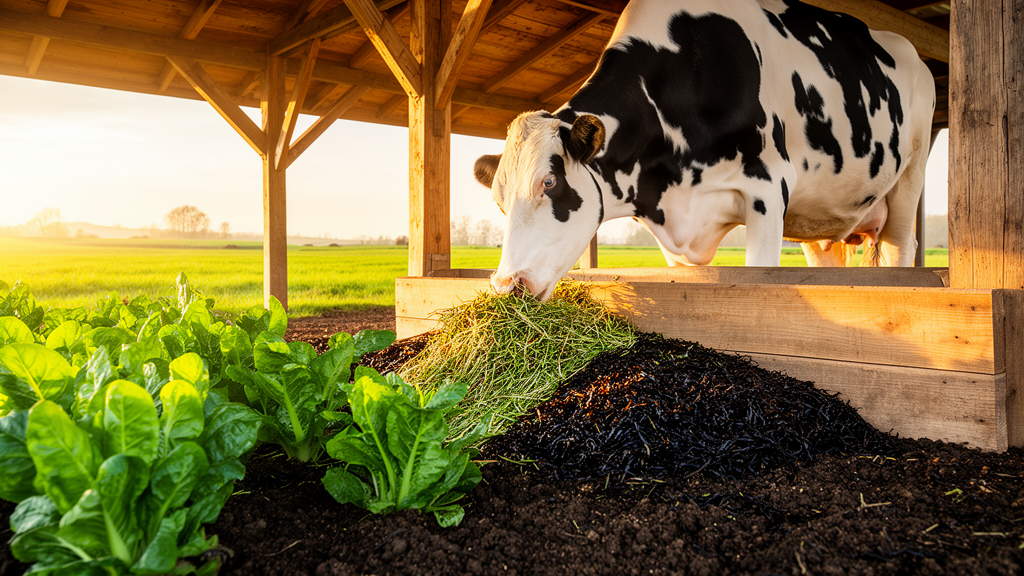
Orgo-Life the new way to the future Advertising by AdpathwayAgricultural researchers have demonstrated that supplementing dairy cow diets with agricultural residues from red sorghum leaves and stems reduces urinary nitrogen excretion by eighteen percent without compromising milk yield or milk composition. Improving nitrogen utilization efficiency represents an urgent environmental and economic priority for modern dairy systems, as lactating cows convert only twenty to thirty percent of dietary nitrogen into milk protein. The unutilized portion is voided in feces and urine, where urinary nitrogen rapidly breaks down into volatile ammonia, leachable nitrates, and nitrous oxide. These compounds contribute substantially to atmospheric air pollution, groundwater aquifer contamination, waterway eutrophication, and agricultural greenhouse gas emissions. By incorporating dried red sorghum crop residues into dairy rations, scientists observed a marked reduction in urinary nitrogen losses, presenting a sustainable, bio-based feeding strategy that valorizes agricultural biomass while mitigating environmental pollution from intensive dairy production.
The underlying mechanism governing this nitrogen partitioning centers upon the complex microbial ecosystem inhabiting the bovine rumen, where microorganisms regulate protein degradation, ammonia release, and microbial protein synthesis. Within this diverse microbial community of bacteria, protozoa, fungi, and archaea, ciliate protozoa account for forty to fifty percent of total microbial biomass. Although ruminal protozoa assist with fiber digestion, they heavily predate on beneficial bacteria, engulfing them and subsequently degrading their protein to release surplus ammonia nitrogen into the rumen. Excess ammonia absorbed across the rumen wall is transformed into urea by the liver and excreted through urine, lowering crucial microbial nitrogen efficiency. Furthermore, rumen protozoa possess high amino acid deaminase activity and maintain symbiotic associations with methanogenic archaea, directly linking protozoal proliferation to elevated nitrogen losses and enteric methane emissions.
To address these metabolic losses, animal nutritionists have increasingly investigated plant secondary metabolites as sustainable rumen regulators that offer natural biodegradability and lower resistance risks than synthetic additives. Red sorghum, botanically classified as Sorghum bicolor (L.) Moench, is cultivated globally for its drought tolerance, low agronomic requirements, and substantial biomass production. While sorghum grain is harvested for food and animal feed, large quantities of vegetative leaves and stems remain underutilized, frequently burned or discarded as agricultural waste. Phytochemical profiling reveals that red sorghum vegetative tissues contain abundant flavonoids, phenolic acids, 3-deoxyanthocyanidins, tannins, and lipids. To investigate whether these bioactive compounds can suppress rumen protozoa and alter nitrogen partitioning, researchers conducted an integrated three-stage study combining laboratory screening, dairy cow feeding trials, and comprehensive phytochemical fraction characterization to support agricultural sustainability and environmental health.
The initial phase comprised an in vitro ruminal fermentation screening experiment designed to characterize dose-dependent responses and determine optimal inclusion rates. Rumen fluid was collected from three cannulated Holstein donor cows maintained in mid-lactation on a standard total mixed ration formulated to meet national nutritional recommendations. Rumen inocula collected before morning feeding were strained through cheesecloth, pooled, and allowed to rest so protozoa could settle before being dispensed into sealed incubation bottles flushed with carbon dioxide. The screening evaluated five supplemental levels of dried, ground red sorghum leaf and stem powder: zero, 10.4, 20.8, 41.6, and 83.2 milligrams per gram of dry matter. Each treatment was incubated across six replicates for eighteen hours at physiological body temperature, allowing researchers to thoroughly evaluate protozoal numbers, fermentation traits, and nitrogen metabolic markers.
The screening assay demonstrated that red sorghum powder exerted concentration-dependent inhibitory effects on ruminal protozoa without impairing fundamental fermentation. Relative to control cultures, sorghum powder at 41.6 and 83.2 milligrams per gram of dry matter suppressed total protozoa by 27.97 percent and 42.74 percent, respectively. The highest dose achieved substantial inhibition of key ciliate genera, decreasing Entodinium by 35.26 percent, Diplodinium by 18.82 percent, and Ophryoscolex by 75.19 percent. Crucially, this ciliate reduction was accompanied by a 32.15 percent decrease in ammonia nitrogen accumulation and a 17.65 percent increase in microbial crude protein generation, providing clear biochemical evidence of altered nitrogen turnover. Fermentation analysis confirmed that while total volatile fatty acid levels remained stable, the highest dose shifted fermentation toward propionate by 26.37 percent and reduced estimated methane production by 14.99 percent, establishing 83.2 milligrams as the optimal dose for animal trials.
To validate these laboratory findings in live ruminants, researchers conducted a forty-nine-day feeding experiment with twenty-two multiparous Holstein dairy cows in mid-lactation. The cows, averaging 695 kilograms of body weight and 192 days in milk, were blocked into balanced cohorts based on parity, physical condition, and initial milk yields. Cattle were assigned either to a control total mixed ration or to the identical ration supplemented with whole red sorghum leaf and stem powder at 83.2 grams per kilogram of diet dry matter. Feeding behavior and individual intake were recorded continuously using automated gate-controlled feed bins paired with electronic transponder collars to meticulously track animal consumption patterns. The trial comprised a fourteen-day acclimation period followed by a thirty-five-day experimental sampling period to evaluate milk production, nutrient digestibility, ruminal microbiome shifts, and whole-body nitrogen partitioning.
Metabolic balance evaluations confirmed that dietary inclusion of red sorghum residue significantly influenced systemic nitrogen excretion pathways in lactating cattle. Most notably, daily urinary nitrogen excretion declined by 17.99 percent in cows receiving the sorghum supplement compared to control cows, dropping from 0.28 kilograms per day down to 0.23 kilograms per day. Fecal nitrogen output, daily milk nitrogen secretion, and total nitrogen intake did not exhibit statistically significant differences between dietary groups. Energy partitioning was similarly unaffected, with gross energy intake, fecal energy losses, and calculated metabolizable energy showing comparable values across treatments. Comprehensive blood biochemical screens performed on day forty-nine corroborated systemic safety, as serum concentrations of blood urea nitrogen, glucose, total protein, albumin, and circulating liver enzymes, including glutamic pyruvic transaminase and glutamic oxaloacetic transaminase, displayed no adverse alterations, confirming normal liver tissue integrity and animal health.
Throughout the seven-week feeding study, daily lactation performance remained steady despite dietary supplementation with fibrous sorghum residues. Dairy cows consuming the red sorghum diet sustained daily milk production at an average of 24.7 kilograms per day, comparing favorably with the 24.5 kilograms per day recorded for control cows. Furthermore, milk fat, protein, lactose, total solids concentrations, milk urea nitrogen, and calculated feed efficiency remained statistically unaltered by the dietary intervention. However, sorghum-supplemented cattle exhibited an elevated feed refusal rate of 9.00 percent compared to 7.09 percent in controls, alongside a statistical tendency toward reduced dry matter intake during weeks four and five. Researchers observed that feed refusals peaked during the third week before declining, reflecting gradual animal acclimatization and behavioral adaptation as animals adjusted to the high fiber content and phenolic compounds present in sorghum.
Microbial community analyses performed on rumen fluid samples collected at the conclusion of the trial demonstrated targeted antimicrobial activity against protozoa rather than broad antibacterial disruption. Microscopic cell counts confirmed that dietary red sorghum reduced total ruminal protozoa populations by 42.61 percent and significantly depleted Diplodinium ciliates by 47.59 percent, alongside numerical reductions in Entodinium and Ophryoscolex numbers. In striking contrast, high-throughput amplicon sequencing targeting the bacterial 16S ribosomal RNA gene revealed that ruminal bacterial diversity remained stable. Alpha-diversity metrics showed no significant changes between diets, and beta-diversity analysis indicated that dietary treatment accounted for only 6.4 percent of the overall variation in bacterial community structure. Predominant bacterial phyla, including Bacteroidota and Firmicutes, as well as dominant genera such as Prevotella, maintained their proportional abundances throughout the supplementation period, confirming a selective, targeted ecological regulator.
To identify the specific bioactive constituents driving these anti-protozoal properties, researchers performed comprehensive phytochemical extractions followed by advanced mass spectrometry profiling. Ultrasound-assisted extraction utilizing seventy percent ethanol produced a non-volatile crude extract with a 44.53 percent dry weight yield, while hydrodistillation yielded 0.1948 percent essential oil. Liquid chromatography tandem mass spectrometry detected 719 distinct chemical entities within the non-volatile extract, dominated by 162 flavonoids, 155 lipids, and 100 phenolic acids, including identified compounds such as ferulic acid, p-coumaric acid, nobiletin, and tangeretin. Gas chromatography mass spectrometry of the volatile essential oil fraction identified twenty-one compounds primarily consisting of fatty acid esters, free fatty acids, and branched alkenes, including hexadecanoic acid ethyl ester and linoleic acid ethyl ester. This diverse chemical profile confirms that red sorghum vegetative residues contain rich reservoirs of valuable bioactive secondary metabolites.
Subsequent comparative laboratory bioassays testing these isolated fractions clarified how distinct phytochemical classes contribute to rumen microbial modulation. The non-volatile ethanol extract effectively duplicated the biological actions of whole sorghum powder across multiple doses, suppressing total protozoa and Entodinium counts while reducing ammonia nitrogen concentrations and elevating microbial crude protein synthesis by 17.5 percent at 0.5 milligrams per milliliter. Conversely, while volatile essential oils inhibited protozoal numbers, they produced no alterations in ammonia accumulation or microbial protein levels. This divergence indicates that while lipid components contribute to antiprotozoal activity, phenolic acids and flavonoids are necessary to remodel ruminal nitrogen turnover. Importantly, the marked reductions in ammonia and increases in microbial protein observed in vitro were not fully mirrored in live cows, likely because coarsely chopped forage releases bioactive phytochemicals more slowly than finely milled laboratory powders, highlighting the need for delivery optimization to harness red sorghum effectively for commercial herds.
Subject of Research: Modulation of ruminal nitrogen metabolism and protozoa in dairy cows using red sorghum crop residues
Article Title: Red sorghum ( Sorghum bicolor (L.) Moench) modulates protozoa-mediated ruminal nitrogen metabolism in dairy cows
Article References: Yi, R., Yang, Y., Ma, L., Vigors, S., García-Vaquero, M., Bridson, C., Yu, Z., Wang, Y., Xu, J., & Bu, D. (2026). Red sorghum (Sorghum bicolor (L.) Moench) modulates protozoa-mediated ruminal nitrogen metabolism in dairy cows. Journal of Agriculture and Food Research, 32, Article 103418. https://doi.org/10.1016/j.jafr.2026.103418
Image Credits: AI Generated
DOI: 10.1016/j.jafr.2026.103418
Keywords: dairy cattle, nitrogen utilization efficiency, urinary nitrogen, rumen microbiome, ruminal protozoa, Sorghum bicolor, red sorghum, phytochemicals, flavonoids, phenolic acids, microbial protein synthesis, ciliate protozoa, ammonia emissions, enteric methane, volatile fatty acids, Diplodinium, Entodinium, milk yield


















 English (US) ·
 French (CA) ·