

 6 hours ago
3
6 hours ago
3
PROTECT YOUR DNA WITH QUANTUM TECHNOLOGY
Orgo-Life the new way to the future Advertising by AdpathwayWild orangutan mothers in Borneo go out of their way, at a real cost to themselves, to give their babies time with other young orangutans. A study in the Proceedings of the National Academy of Sciences, highlighted this week by Nature, found that mothers travel farther and spend less time feeding on days when their infants play together.
That is a surprising effort, especially for the most solitary of the great apes. Adult orangutans spend much of their lives alone or with only their dependent young, so play partners do not appear by chance. The researchers say mothers effectively arrange the meetings.
The finding gives a new window into orangutan family life at a time when Bornean orangutans are critically endangered, and it suggests that social contact matters to young orangutans enough that mothers pay for it in energy.
Fifteen Years of Watching Mothers and Infants
The research comes from Tuanan Research Station in Indonesian Borneo, where scientists have followed habituated wild orangutans since 2003. The team analyzed about 32,000 hours of observations covering 31 mother-infant pairs over roughly 15 years, according to the Max Planck Institute of Animal Behavior.
The paper, led by Max Planck postdoctoral researcher Odd Jacobson with senior author Maria van Noordwijk, was published in PNAS on Oct. 6. Co-authors include Sri Suci Utami Atmoko of Universitas Nasional in Indonesia and Max Planck director Meg Crofoot, with collaborators at the University of Zurich and Rutgers University.
Van Noordwijk summarized the main result in the institute's release: "We reveal a hidden cost of solitary living."
That long record is what made the pattern visible. Researchers at Tuanan follow individual orangutans from the moment they leave their night nests in the morning until they build new ones in the evening, logging where they travel, what they eat, and whom they meet. Over years, those day-long follows reveal routines that would be invisible in a short study.
Young orangutans also stay with their mothers for an unusually long time. Infants typically nurse and travel with their mothers for several years, which means a mother's daily choices shape almost all of her offspring's early social experience.
Longer Walks and Less Time Eating on Play Days
The patterns were consistent. Mothers whose infants were close in age shared more of the forest and their infants played together more often, even after accounting for how closely related the mothers were and how much fruit was available.
The choice of partner did not appear random. Jacobson said in the institute's release that mothers seemed to pair their young with play partners that were physically and developmentally suitable, which would make play safer and more balanced for both infants.
The movements suggested planning. Starting the day before a play session, mothers moved toward the other mother's core area, then moved back afterward. On play days and the days around them, mothers spent more time traveling and less time feeding, which for a large ape living on fruit, leaves and bark is a real energy trade-off.
The payoff for the infants was modest in time. Playdates happened on about 6% of observed days, or roughly once every 20 days, and the play itself typically totaled about 20 minutes on those days.
The cost is real but measured. Mothers fed less on those days, not that they stopped eating entirely, so the trade-off is time and energy rather than missed meals.
Unanswered Questions About the Payoff
The study is observational, which means it shows a strong pattern but cannot prove why mothers behave this way. The researchers interpret the movements as deliberate, but other explanations, such as shared food sources drawing mothers together, were tested and did not fully account for the pattern.
The biggest open question is whether the effort pays off. Co-author Atmoko told Phys.org that researchers still do not know "if the time and energy mothers spend arranging playdates give their young an advantage." Answering that would require tracking how these infants fare as adults.
The results also come from one long-term research site. Orangutans in other forests, with different food supplies and population densities, may behave differently, so the findings should not be applied to every population without further study.
Habitat Loss Raises the Stakes for Solitary Apes
The study adds weight to conservation concerns. If young orangutans benefit from occasional peer contact, then forest fragmentation that isolates mothers could quietly reduce those opportunities. Habitat loss from logging, plantations and fire has been a major driver of orangutan declines on Borneo.
Crofoot noted in the institute's release that when social contact is scarce, someone has to pay the cost. For orangutans, that someone appears to be the mother, who must walk farther through the forest to make it happen.
For readers, the most direct ways to support orangutans are well established. Choosing products made with certified sustainable palm oil, supporting accredited zoos and sanctuaries that fund field conservation, and backing groups working to protect peat swamp forests all help reduce pressure on remaining habitat.
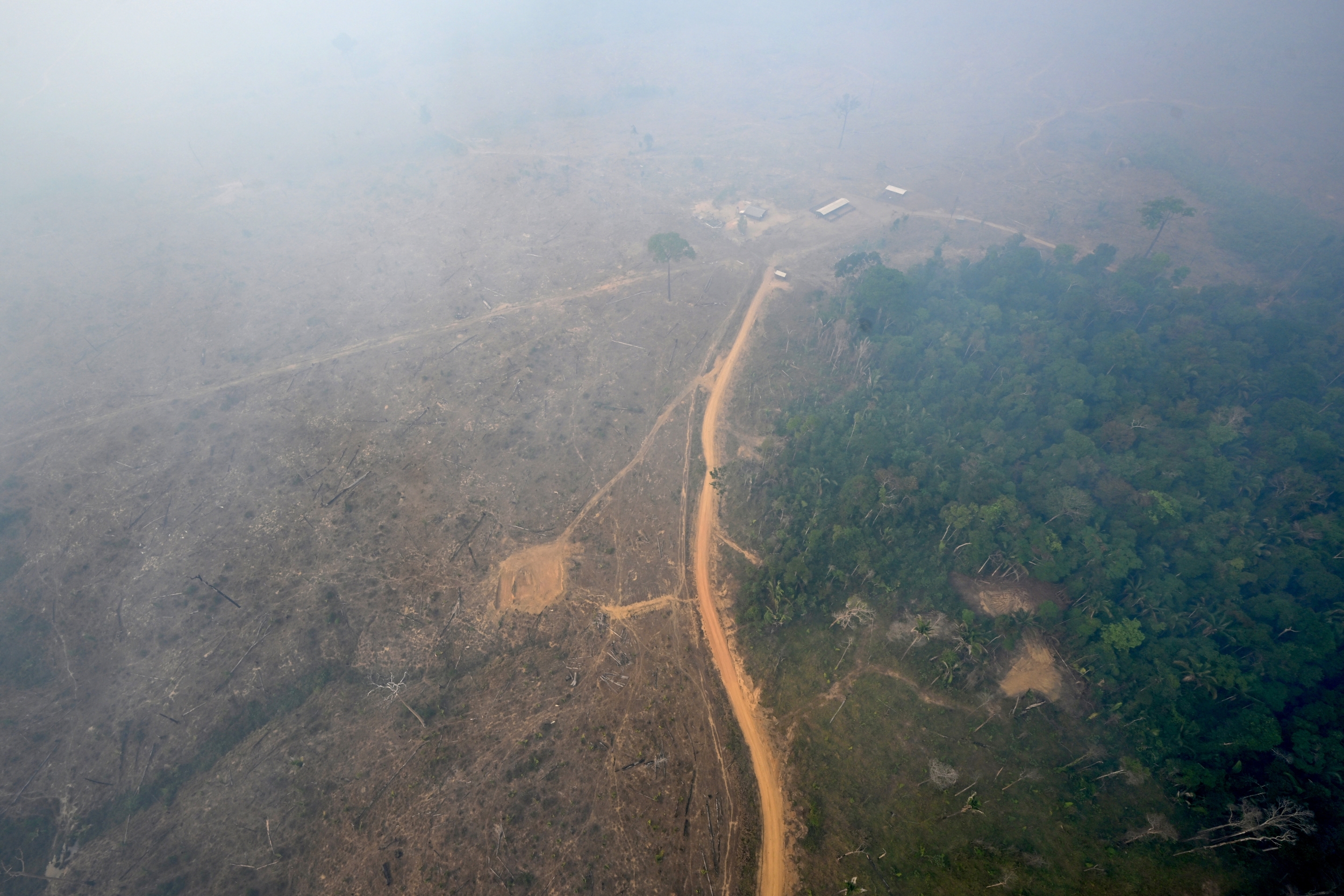
Peat swamp forests like those around Tuanan are also vulnerable to fire during drought years, when dried-out peat can burn for weeks and release dense smoke. Nature World News reported this week on Indonesian fire haze affecting neighboring countries, a reminder of how drought and fire can reach orangutan habitat.
The work also reflects the value of long-term field stations. Patterns like these only emerge after years of patient observation, and stations such as Tuanan depend on steady funding and stable forest protection to continue.
Nature World News will follow any additional findings from the team, including whether early play shapes the social skills of adult orangutans.
The takeaway is that even the most solitary great ape is not entirely alone. Orangutan mothers appear to trade food and energy to give their babies something they cannot provide themselves: time to play with a peer, however briefly.
What Readers Want to Know
What did the orangutan study find?
Wild orangutan mothers in Borneo traveled farther and spent less time feeding on days their infants played with other young orangutans.
Where was the research done?
At Tuanan Research Station in Indonesian Borneo, where wild orangutans have been studied since 2003.
How often do orangutan babies play together?
Playdates occurred on about 6% of observed days, roughly once every 20 days, with about 20 minutes of play on those days.
Do orangutan mothers skip meals for playdates?
Not exactly. They spent less time feeding on those days, but the study does not show they stopped eating.
Does play help young orangutans later in life?
That is not yet known. Researchers say long-term tracking is needed to answer it.
Are Bornean orangutans endangered?
Yes. Bornean orangutans are listed as critically endangered, mainly because of habitat loss.
© 2026 NatureWorldNews.com All rights reserved. Do not reproduce without permission.


















 English (US) ·
  French (CA) ·