

Shrubs that bloomed beautifully in May can still disappoint the following spring, and late summer dryness is usually the reason. A weekly soak from now through autumn protects the buds forming for next year right now.
Azaleas and rhododendrons look after themselves for much of the year. That reputation is fair, right up until late summer. What happens to these shrubs in August and September rarely shows at the time, and the consequences arrive eight or nine months later as a sparse, patchy flush of flowers.
Both belong to the genus Rhododendron. Both set next spring's flower buds during July and August. Watering azaleas through that window is the one job that carries real weight, and it gets skipped easily when the plants show no obvious distress. A weekly soak usually covers it. How and when the water goes down matters as much as the amount.
Late Summer Is When Next Year's Flowers Are Set
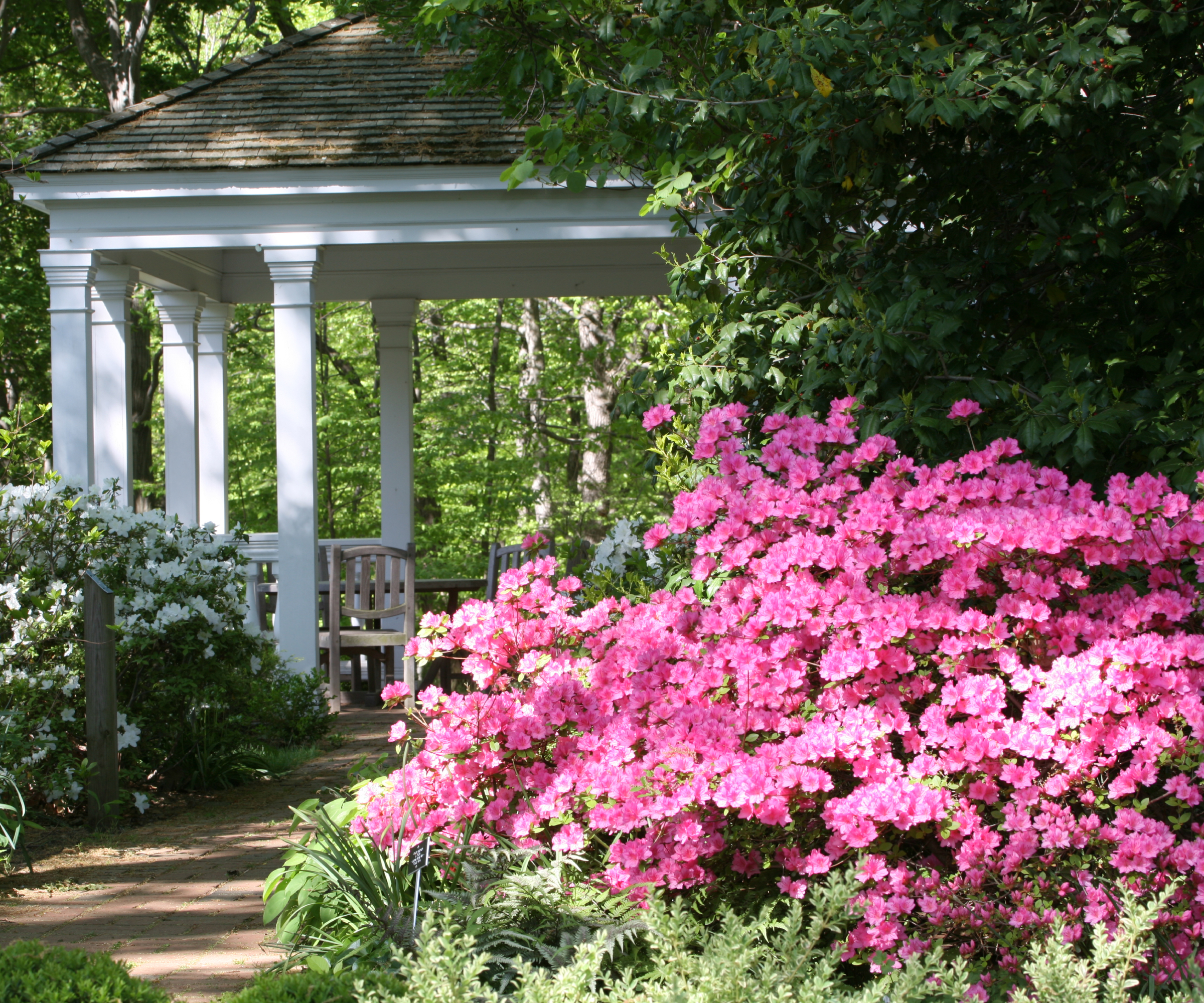
(Image credit: cjmckendry / Getty Images)
Flower bud differentiation happens in midsummer, usually across July and August in temperate gardens. By the end of that stretch a shrub has committed to a finite number of buds. No amount of spring feeding raises the count afterward. Fat, rounded buds at the branch tips are the ones to look for, sitting alongside the slimmer pointed leaf buds. Deciduous and evergreen types run on the same schedule.
Drought during that window thins the display. A shrub short of water pulls resources away from bud formation, and buds that started never get to finish. The damage stays invisible through August. Often there is no obvious sign beyond some afternoon leaf curl. The plant heads into autumn looking healthy enough. The bill comes due next spring, when half the branch tips leaf out and never flower.
How Much Water, and How Often
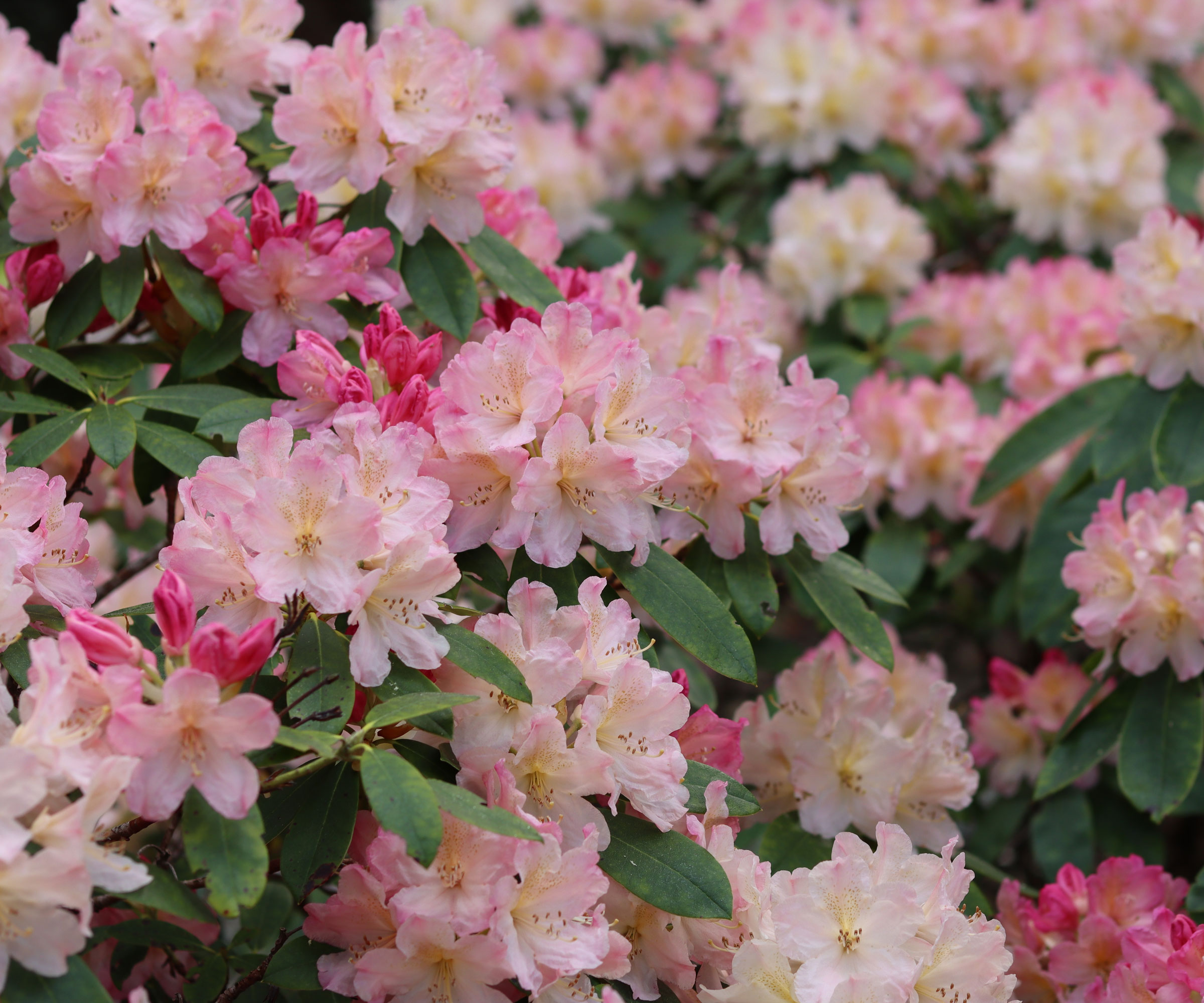
(Image credit: Francesca Leslie / Shutterstock)
Aim at roughly 1 inch (2.5cm) a week, rainfall included. Below that, supplementary watering will be necessary. A rain gauge from Amazon settles the question and ends the guesswork about whether an afternoon storm actually delivered anything. Plenty of summer showers amount to far less than they appear to. Shrubs in their first two seasons need closer attention.
One long soak beats several short ones. Aim to wet the soil down to roughly 8 to 10 inches (20-25cm), which takes a slow trickle rather than a quick sweep across the bed. Shallow sprinkling wets the mulch and very little underneath it. Push a trowel in near the drip line to see how far it actually traveled.
Location, Location, Location
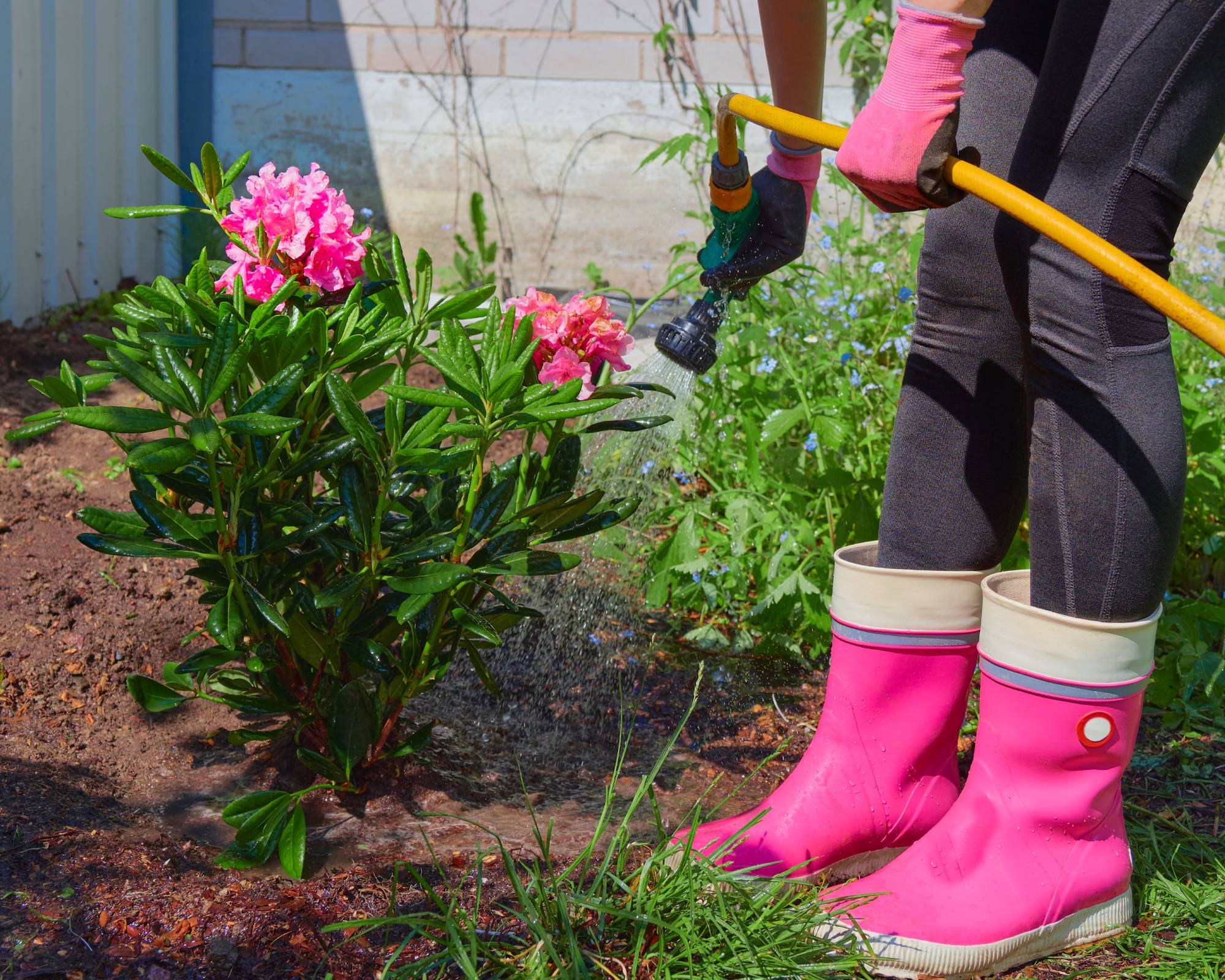
(Image credit: Roman Beliakov / Getty Images)
Both plants carry a shallow fibrous root mat, confined almost entirely to the top 6 to 12 inches (15-30cm) of soil. There is no taproot reaching down for reserves. That mat spreads outward as well, so water poured tight against the stem misses much of it. Work out to the drip line and slightly past it. A soaker hose from Home Depot laid in a loose ring around the shrub can handle the whole job unattended.
Morning is the better slot. Foliage dries before evening, which keeps fungal trouble off evergreen leaves. Overhead sprinklers are the weakest option for that same reason. A fair share evaporates before it lands. Water at ground level and go slowly. Sloped beds may want two shorter passes with a pause between.
Holding Moisture Steady Without Drowning the Roots
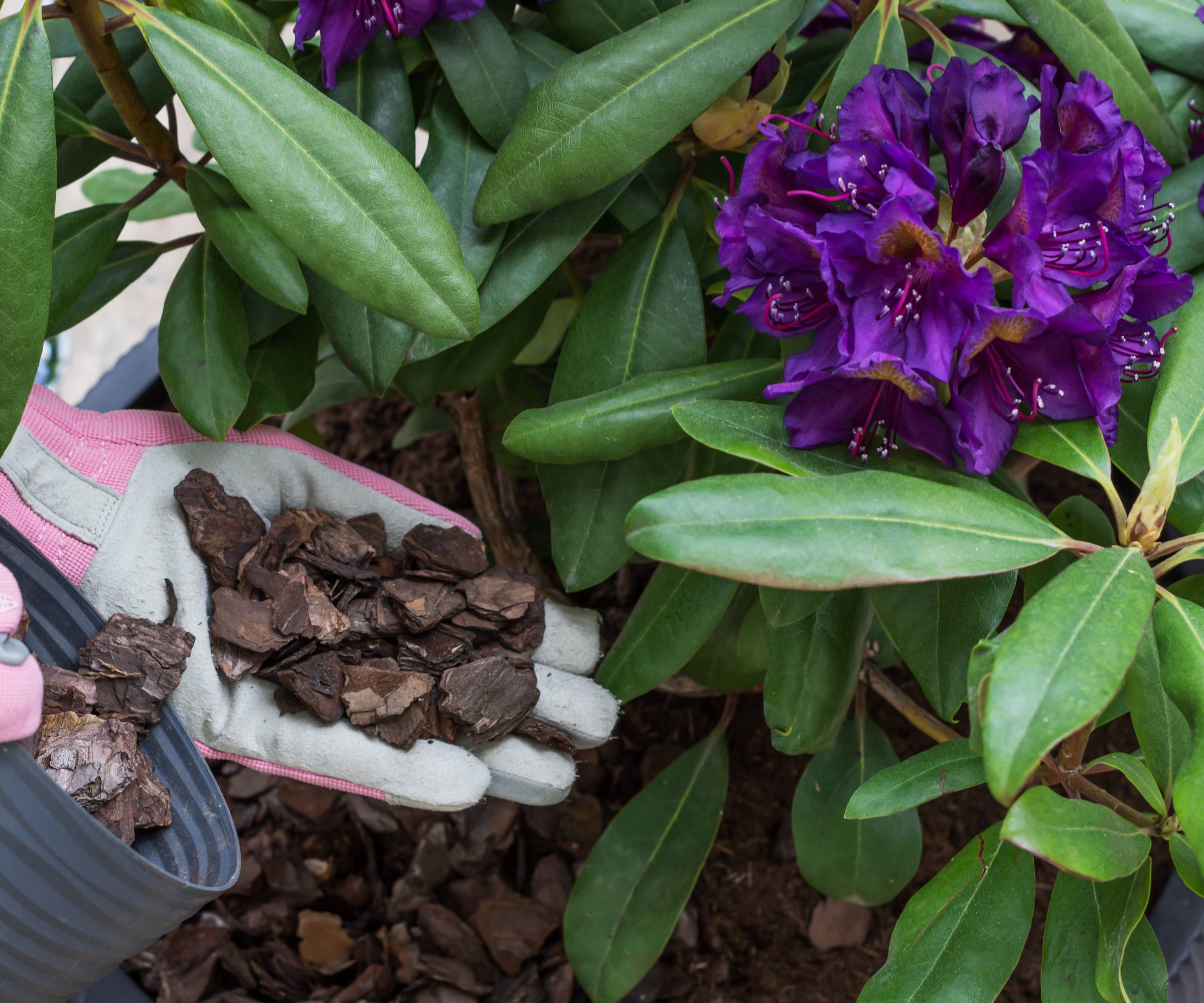
(Image credit: Jurgute / Getty Images)
Mulch buys time between waterings. A 2 to 3 inch (5-8cm) layer of pine bark mulch from Walmart holds moisture in the root zone and cools the soil underneath. What it will not do is change the pH, whatever the bag implies. Surface mulch rarely shifts a reading at all. Elemental sulfur dug in, after a soil test, is the reliable route to the 4.5 to 6.0 range. Keep mulch clear of the stems by an inch or two. A pile against the trunk traps moisture right where crown rot starts.
Too much has its own cost, though. Ground that stays waterlogged sets up Phytophthora root rot, usually Phytophthora cinnamomi. Infected shrubs wilt. So they get watered, and the rot moves faster. Anything drooping in soil that is already damp probably has a drainage problem rather than a thirst one — check with a finger before reaching for the hose. Heavy clay may never drain well enough on its own. A bed raised 12 inches (30cm) or more above grade sidesteps the question entirely.
These are low-effort tasks you can spread out between now and the first hard frost. Keep it up, and the buds now forming on those branch tips should open next spring in the numbers they were meant to.

















 English (US) ·
  French (CA) ·