

Have you ever heard of box tree moths? I hadn’t until my sister’s boxwood shrubs suddenly looked like they had been fried to a crisp. The box tree moth (Cydalima perspectalis) is an invasive species of insect that is spreading throughout the United States, Canada, and Europe and destroys boxwood shrubs.
An infestation can turn lush boxwood shrubs into twigs in a matter of weeks. Early detection and treatment is key to getting rid of boxwood moths and protecting your shrubs from future damage.
Simple cultural and biological controls like cutting back infested shrubs and applying a Bacillus thuringiensis var. Kurstaki spray, available on Amazon, can help stop the infestation. Keep reading to learn more about box tree moths and how to protect your boxwoods from this very hungry caterpillar.
What is a Box Tree Moth?
Image 1 of 2
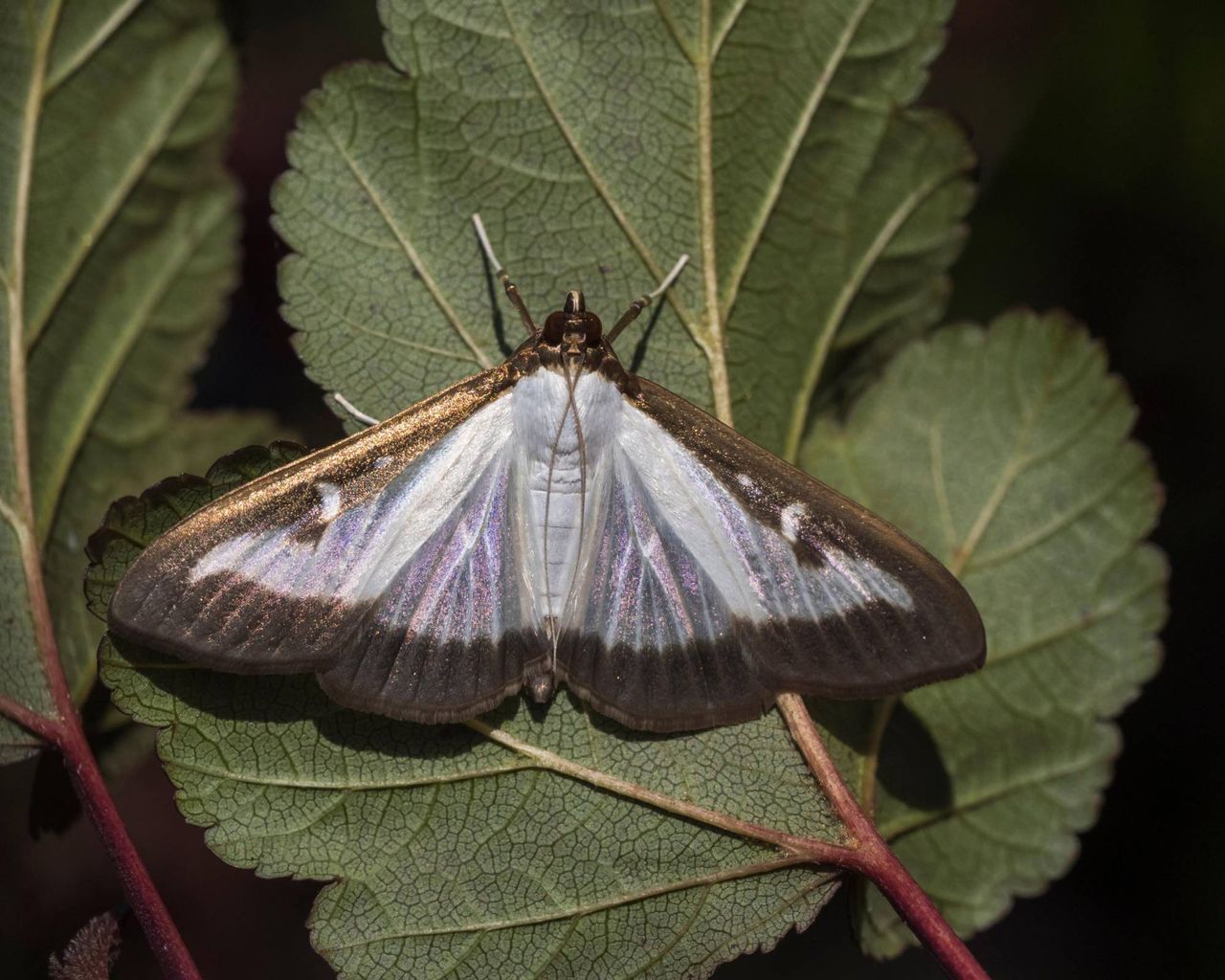
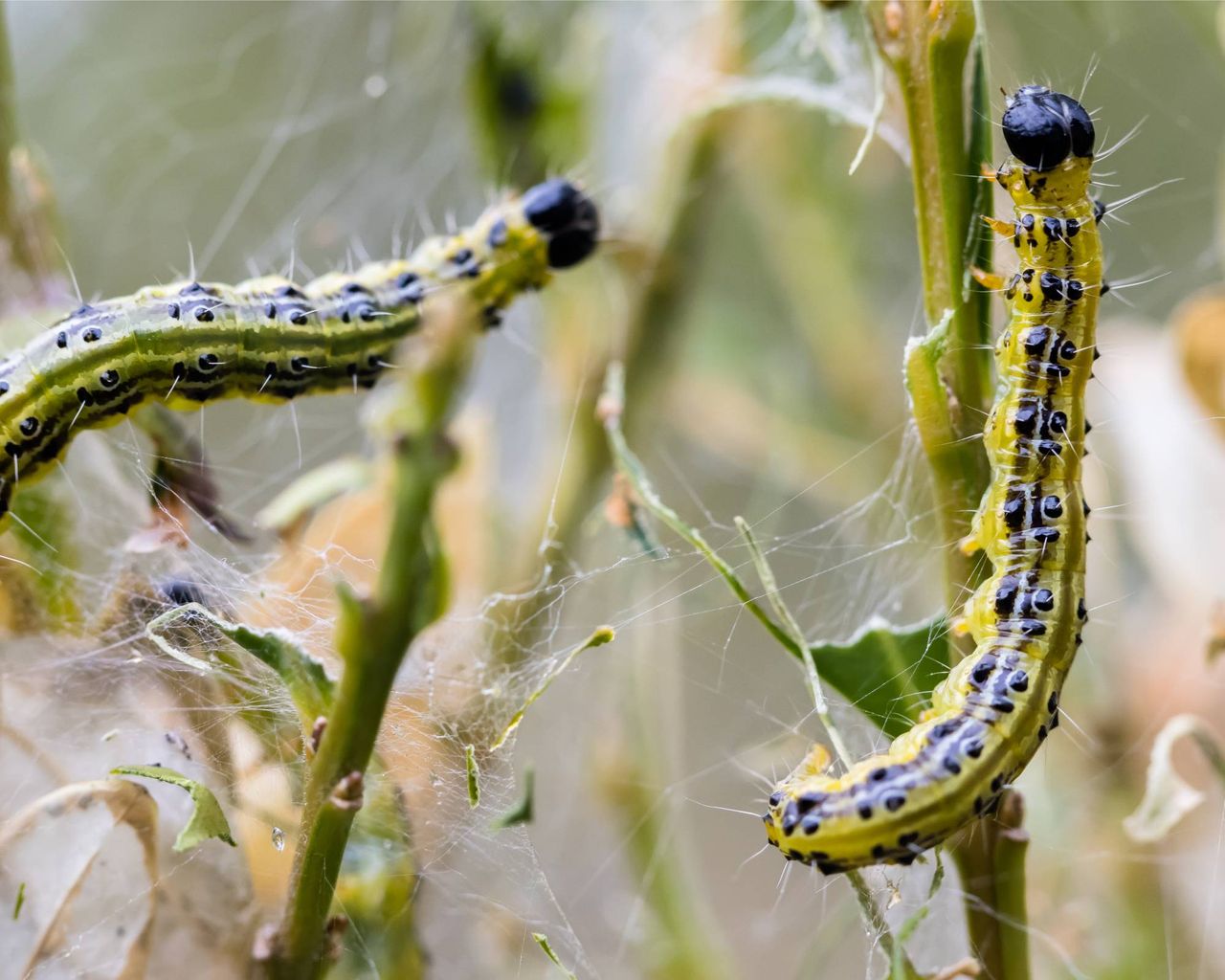
Box tree moths (BTM) are a species of moth whose larvae (caterpillars) can strip a healthy boxwood shrub (Buxus spp.) of all its leaves and kill it in a few weeks. These garden pests are native to Asia but have spread quickly through Europe and have now made it to the United States and Canada. As of 2021, the USDA has confirmed box tree moths in Delaware, Kentucky, Maryland, Massachusetts, Michigan, New York, Ohio, Pennsylvania, Virginia, and West Virginia.
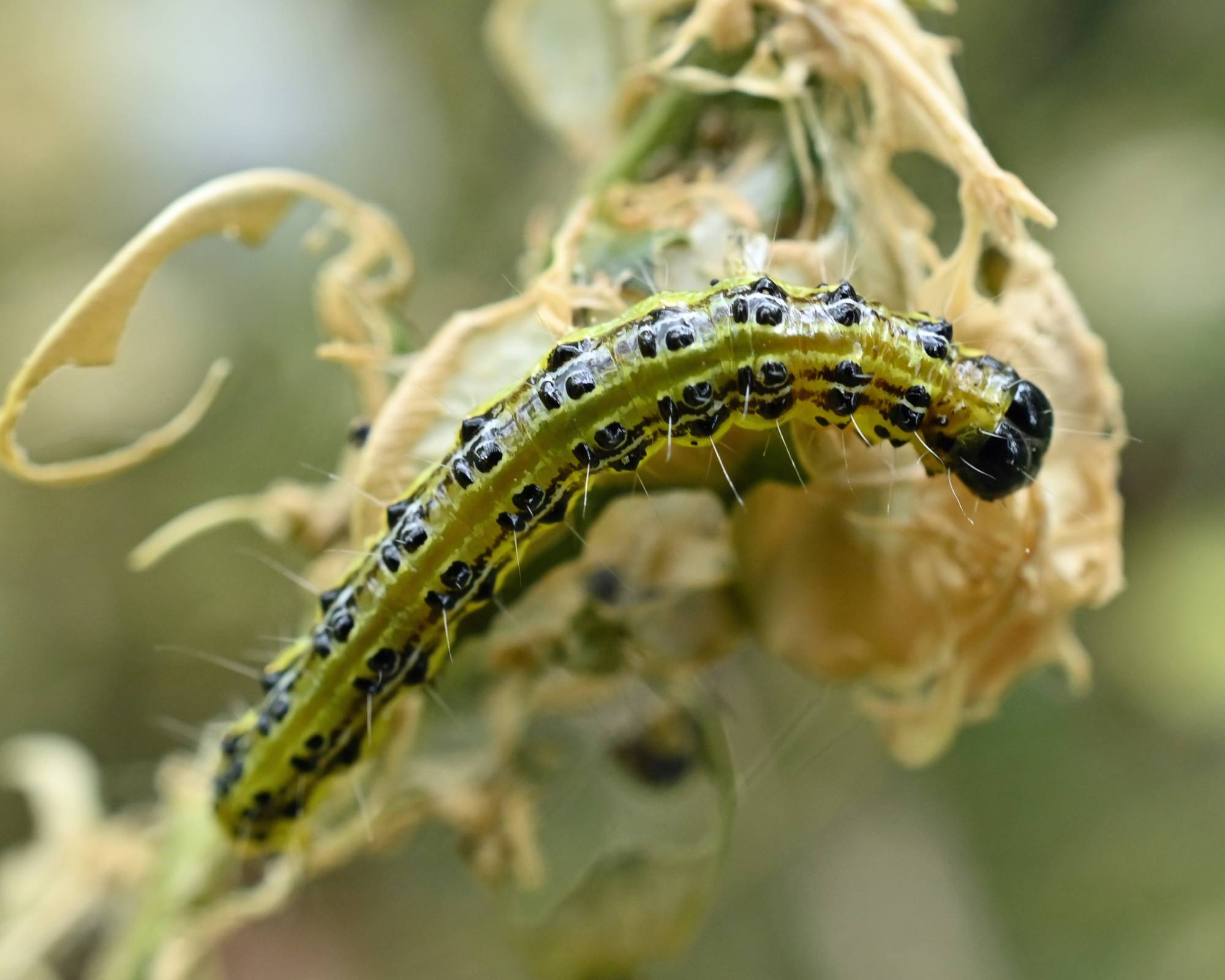
Adult box tree moths generally have white wings with brown borders, but they are mostly active at night and hard to spot. The larvae of box tree moths are lime-green caterpillars with black stripes, white spots and a shiny black head. These shrub pests are about an inch in length and are the only type of pest that will fully defoliate boxwood shrubs.
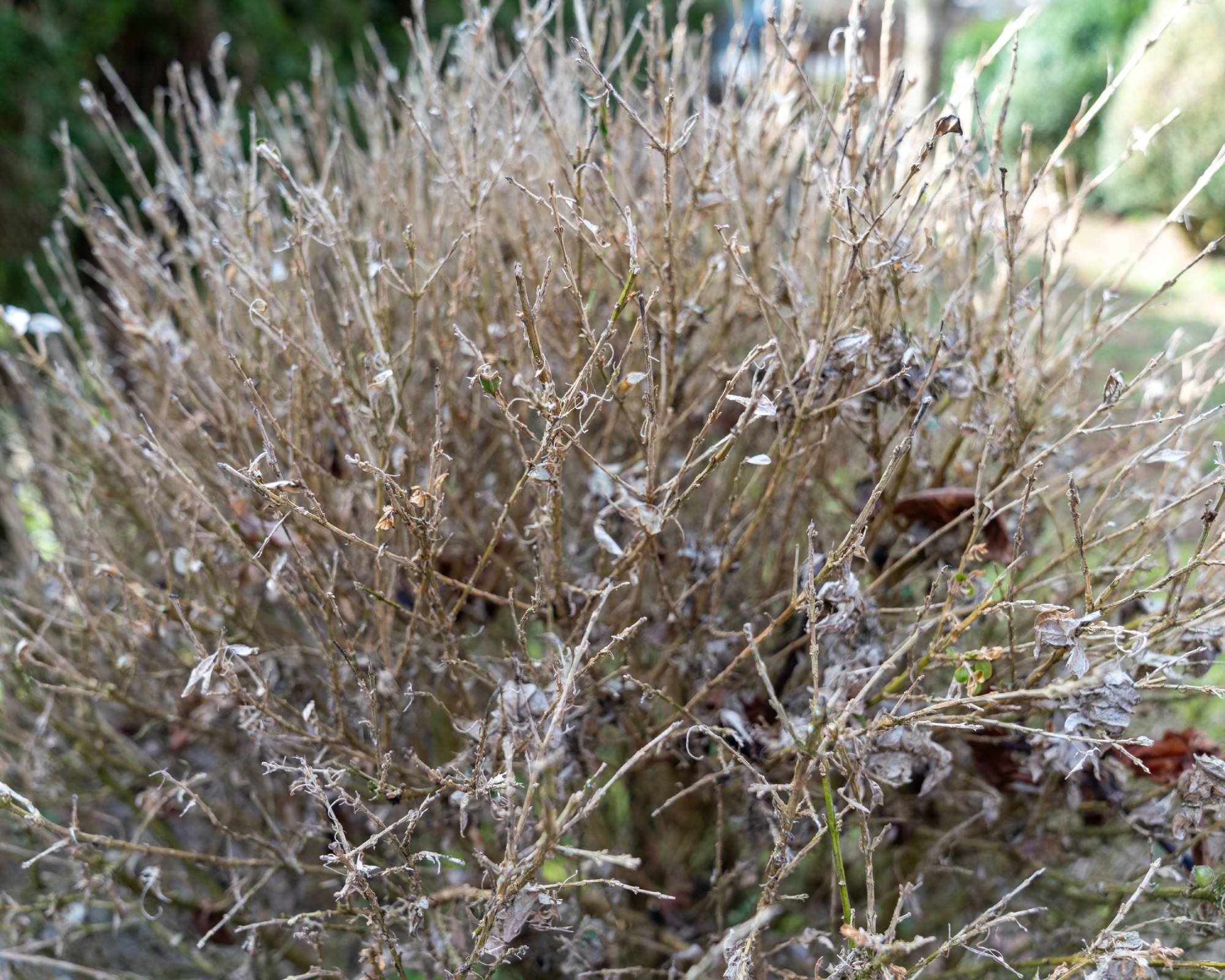
Box tree moth damage starts with missing parts of leaves and progresses into “curlicue” damage to leaves where there is just the central vein of the leaf left which turns brown. Eventually, the shrub looks like a crispy, brown skeleton of itself. You might see webbing and small caterpillars amongst leaves and twigs and sawdust-like frass (excrement) on or around the infested shrubs.
Unfortunately, BTM can overwinter easily and survive temperatures as low as -22 degrees Fahrenheit (-30 C). It is important to spot the infestation and begin treatment as soon as possible to prevent them from overwintering and spreading further next spring when they wake up.
How Do You Get Rid of Boxwood Moths?
Now that you have determined you have a box tree moth infestation, it is time to get to work treating it. It is a good idea to contact your local extension office and report the infestation, too, as this is a newly arrived invasive species and tracking is important.
Cultural Controls
(Image credit: LoNa Arts / Getty Images)
Trimming boxwoods back as much as possible will remove damaged branches and the BTM caterpillars and pupae. It is very important that you place any affected plant material into two trash bags and dispose of it in the trash. Double-bagging will help prevent these boxwood shrub pests from escaping and damaging other shrubs.
Do not compost affected leaves and branches and don’t leave it in the street for the city to pick up. This will allow BTM caterpillars to spread.
Remove leaves, yard debris, and mulch from under the affected boxwood shrubs to reduce the places the caterpillars can overwinter.
Biological Controls
(Image credit: Klaus Bargheer / Getty Images)
Luckily, one of the best methods of treatment is easily found at your local garden center. Bacillus thuringiensis var. Kurstaki is a naturally occurring bacterium found in soil that targets leaf-chewing caterpillars like box tree moth larvae. Beneficial insects, humans, and pets are unaffected by it and you can even find it on Amazon. Simply spray it on the leaves of your infested boxwoods and the bacterium kills the larvae as soon as they ingest it.
If you have treated your boxwoods and they don’t bounce back next spring, it might be a good idea to swap out your shrubs for native shrubs that are similar but more resistant to pests and diseases like a ‘Soft Touch’ holly shrub or Tater Tot thuja shrub from Fast Growing Trees.
Frequently Asked Questions
Will a box tree recover from moth damage?
Yes, if an infestation is caught and treated early, boxwoods can bounce back from box tree moth damage.
Why is the box tree moth a problem?
The box tree moth is an non-native insect that quickly and thoroughly destroys boxwood shrubs and is spreading across North America. Boxwoods are some of the most commonly planted ornamental shrubs in the U.S. and widescale destruction of them means gardeners are having to spend more money to replace them. Additionally, destruction of boxwoods at nurseries negatively affects the industry through lost sales and cost of pest control.
















 English (US) ·
  French (CA) ·