

I’ve always been drawn to blue hydrangeas. As the rarest color in the plant world, blue adds an enchanting quality to the garden that’s hard to replicate with any other flowering shrub. So when I first planted one in my yard, I was so disappointed when the vivid blue blooms were gradually replaced by pink as the plant acclimatized to my soil. The flowers were beautiful and abundant, but not the look I was hoping for.
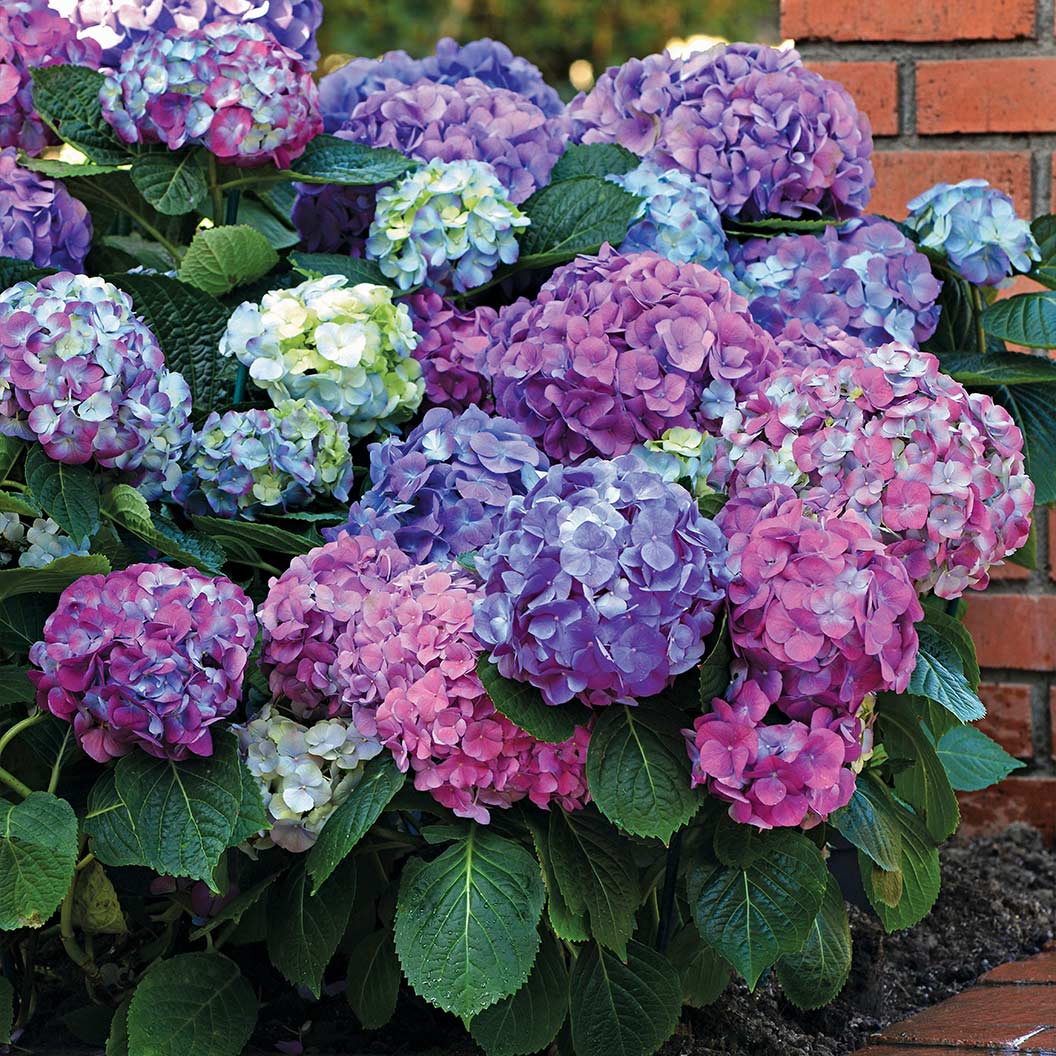
The following year, I set out to learn how to change hydrangea color from pink to blue. But along the way, I stumbled across an even more intriguing idea: instead of choosing one or the other, you can encourage a single hydrangea to produce blooms in pink, purple, and blue at the same time, creating a striking tie-dye effect.
The trick comes down to soil chemistry, and, with a bit of good hydrangea care, it's actually very simple to try yourself. There is one important catch, however. It only works with certain hydrangea varieties, particularly Hydrangea macrophylla (aka bigleaf or mophead hydrangeas). If you have one in your yard, this easy technique could reward you with the most eye-catching hydrangea display you've ever grown.
What Causes Hydrangeas to Change Color?
Mophead hydrangea color is influenced partly by the cultivar, as some are bred to have an enhanced ability to bloom with pink, blue, and purple flowers simultaneously. However, it's mostly impacted by soil pH and how much aluminum the plant can absorb from the soil. In acidic soil, hydrangeas can absorb more aluminum through their roots, producing blue flowers, while in alkaline soil, aluminum becomes less available, resulting in pink blooms. When soil conditions fall somewhere in between, flowers often emerge in shades of purple and lavender.
If you're not sure of your soil pH, it's worth testing it before attempting to change flower color. For a quick reading, pH test strips such as these from Dewilde Trading Co can help you determine whether your soil is acidic or alkaline. If you've never tested your soil before, however, a comprehensive kit is a better investment. Our Content Editor Kathleen recently reviewed the MySoil Soil Test Kit – which is available to purchase from Amazon – and found it gave a much more complete picture of soil pH and nutrient levels.
Depending on soil pH, you can generally expect the following flower colors:
- pH 5.5 and below: Blue blooms – acidic soil allows hydrangeas to absorb aluminum
- pH 5.6–6.5: Purple and lavender blooms – a transitional state between blue and pink
- pH 6.6 and above: Pink blooms – alkaline soil limits access to aluminum
For multicolor hydrangeas, you're not aiming for a single pH across the entire root zone. Instead, you need to create slightly different soil conditions around different parts of the plant, encouraging a mix of blue, purple, and pink blooms.
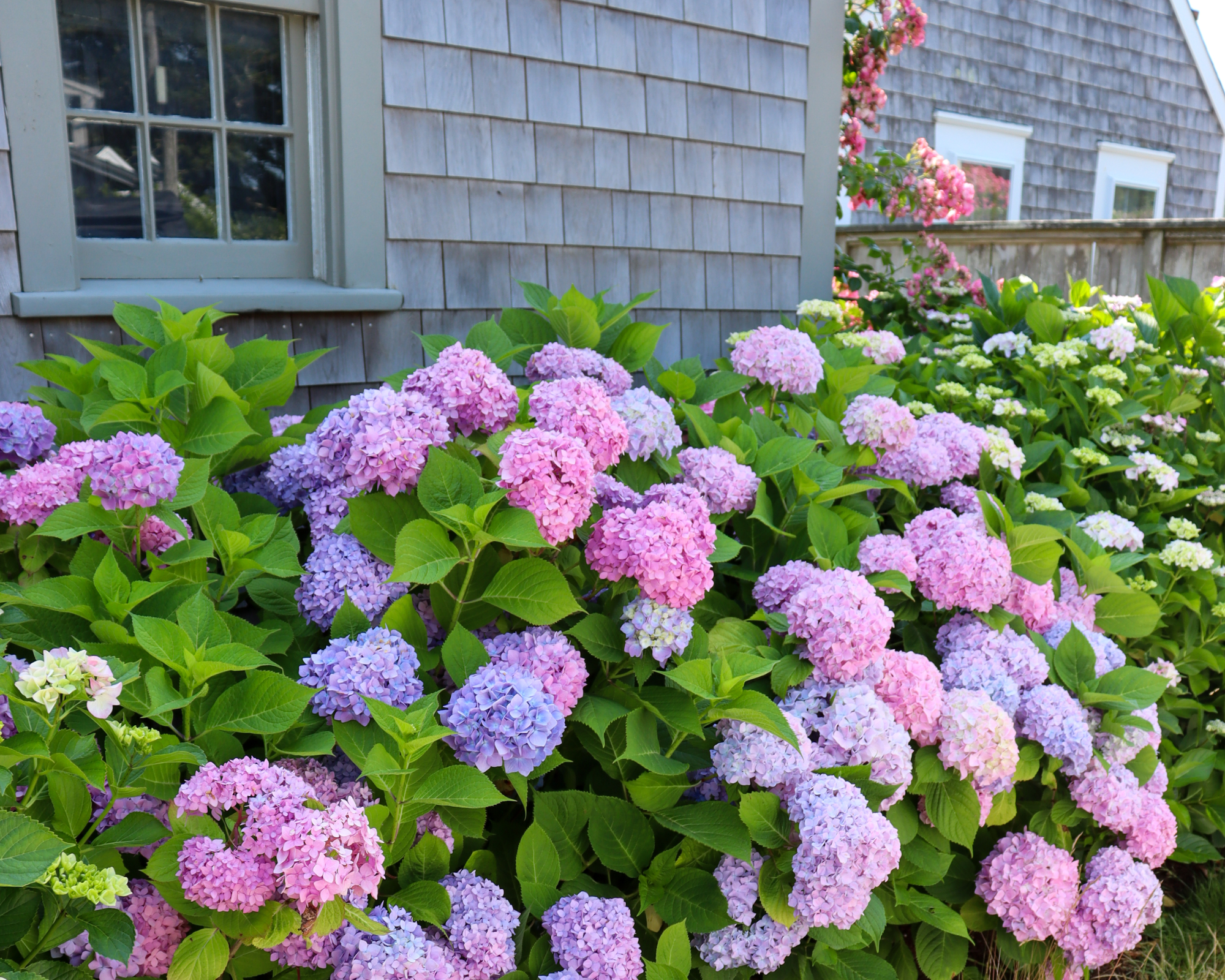
(Image credit: Sydni Rudowitz / Getty Images)
How to Create Multicolor Hydrangeas
Rather than trying to make the entire planting area acidic or alkaline, the secret to growing pink, purple and blue blooms on the same hydrangea is to create slightly different soil conditions around different parts of the root system. This will encourage some roots to access more aluminum than others.
If your soil is alkaline, apply an acidifying amendment such as Hoffman’s Blue Magic Aluminum Sulfate to one side of the plant, following the manufacturer's instructions. This will gradually lower the soil pH and increase aluminum availability, encouraging blue flowers. Leave the opposite side untreated.
Conversely, if your soil is naturally acidic, lightly amend it with garden lime, such as these Earth Science Fast-Acting Lime Granules from Amazon, to maintain more alkaline conditions that favor pink blooms.
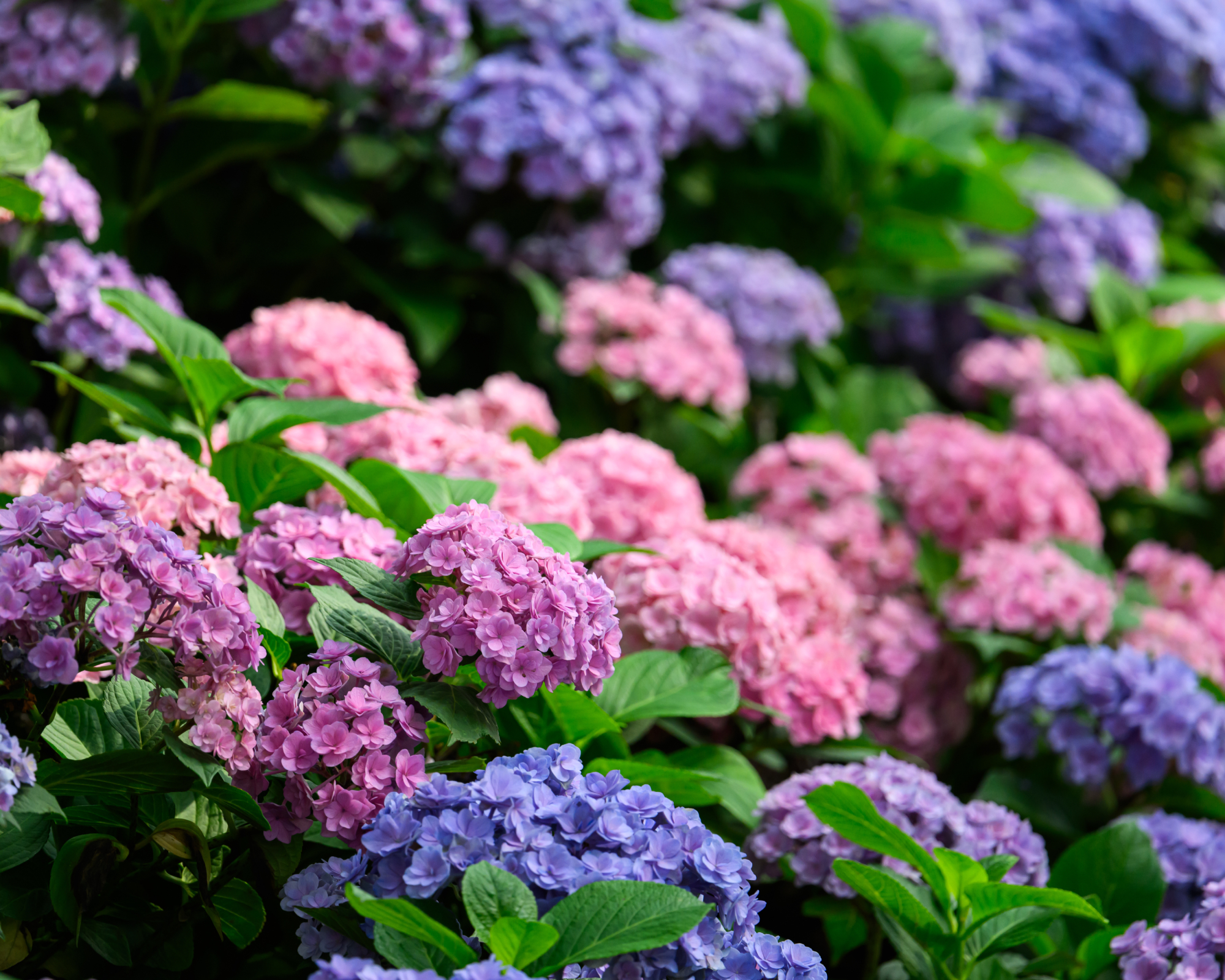
As the hydrangea's roots spread through these different soil environments, the plant can produce flowers in multiple shades at once.
(Image credit: FanPro / Getty Images)
What Colors to Expect?
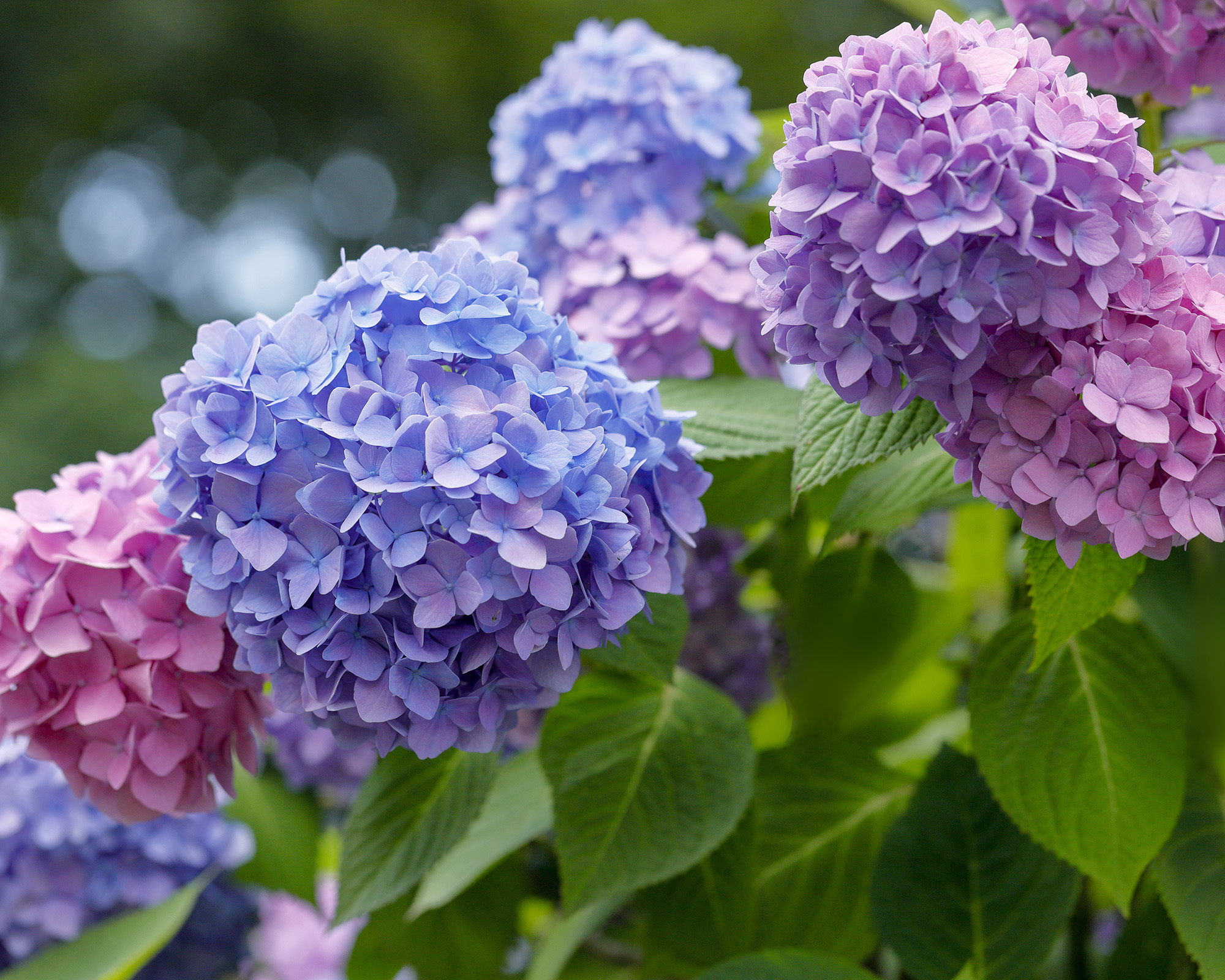
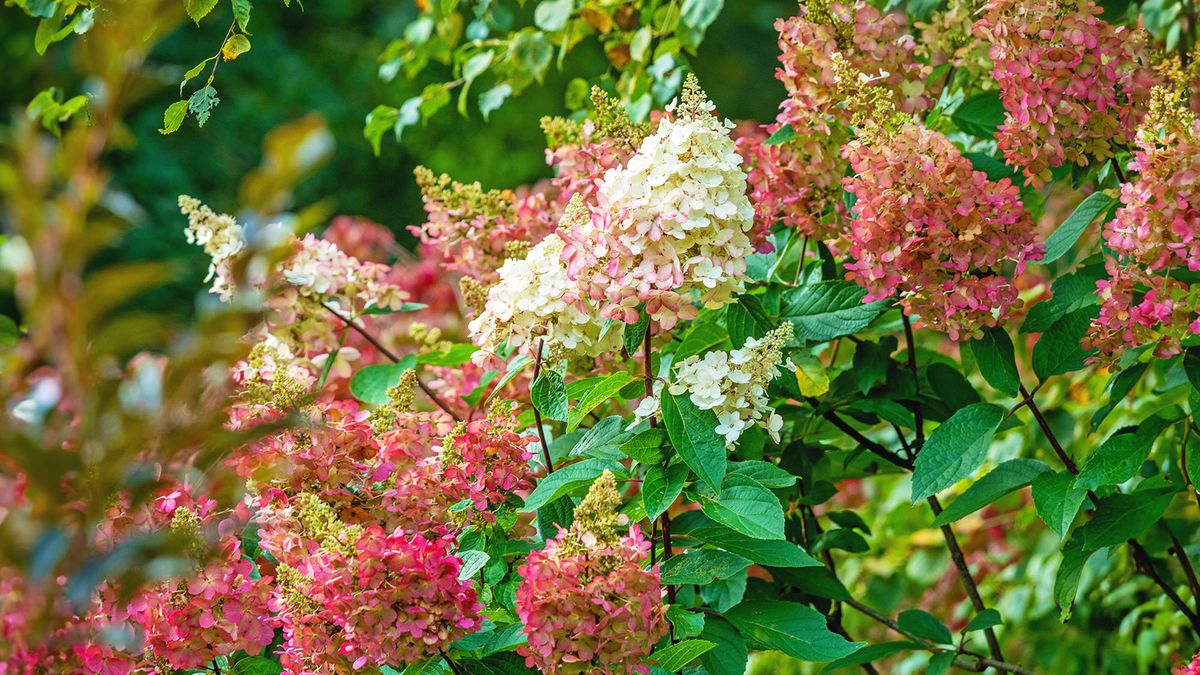
Some stems may carry blue blooms, while others produce pink flowers, with plenty of purple and lavender tones appearing in between.
Patience is key, however. Hydrangea flower color won't change overnight, and the most dramatic results usually appear the following flowering season once the plant has had time to respond to the changing soil conditions. The reward is a unique, tie-dye effect that looks far more complex than the simple soil tweak behind it.
(Image credit: Getty Images)
Try Growing a Tie-Dye Container Hydrangea
If you want to try this technique, growing your hydrangea in a container is often the easiest option. Pots give you far more control over soil conditions than a garden border, where pH levels can vary, and amendments are quickly diluted by the surrounding soil.
Fill part of the container with ericaceous compost to create more acidic conditions, and leave the rest of the potting mix closer to neutral. This will encourage different parts of the root system to access different soils, increasing your chances of producing a mix of blue, purple, and pink blooms on the same plant.
As a general rule, the larger the container, the easier it is to provide differing soils, and will give the hydrangea plenty of room to grow and flower abundantly. It’s also more important to fertilize hydrangeas in pots – this Gardenwise Slow Release Hydrangea Fertilizer from Amazon feeds plants and helps acidify soil.
Shop Multicolored Hydrangeas
These stunning hydrangea varieties are more predisposed to displaying multicolor blooms.
Endless Summer Bloomstruck Reblooming Hydrangea
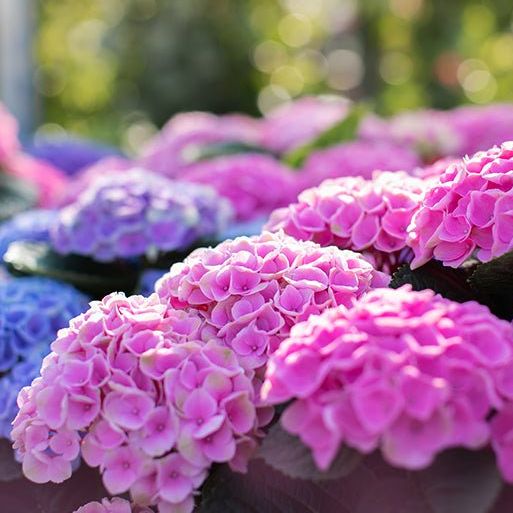
Bloomables L.A. Dreamin Hydrangea
Elizabeth Ashley Bigleaf Hydrangea
While many gardeners focus on turning hydrangeas blue, the most beautiful blooms often appear somewhere in the middle. Soft lavenders, smoky mauves, and rich purples emerge when soil conditions sit between acidic and alkaline, creating shades that are often more unusual than either pink or blue alone – for a truly one-of-a-kind hydrangea that looks as though it has been painted in watercolors.















 English (US) ·
  French (CA) ·