

Many of the beetles people lump together as June bugs aren't June bugs at all. And the one most often mistaken for one can quietly chew a whole garden to lace while you're busy not worrying about it.
Look at them properly and you'd never confuse the two. But in that half-second before you do, they blur. Both are scarab beetles. Both crawl out of the soil in early summer and start eating. The similarity pretty much stops there. One is the June bug, a clumsy night-flier that chews a few leaves and moves on. The other is the Japanese beetle, near the top of every list of the country's worst garden pests. One is a nuisance you can mostly live with. The other can take a bush apart in a few days.
Identifying garden pests correctly is the whole game here, because the right response depends entirely on which beetle is in front of you. Pick the wrong fix and you either overreact to a bug that was never much of a threat, or you wave off one that's about to skeletonize the roses. A few clear differences sort it out fast, and once you know what to look for, you won't mix them up again.
June Bugs
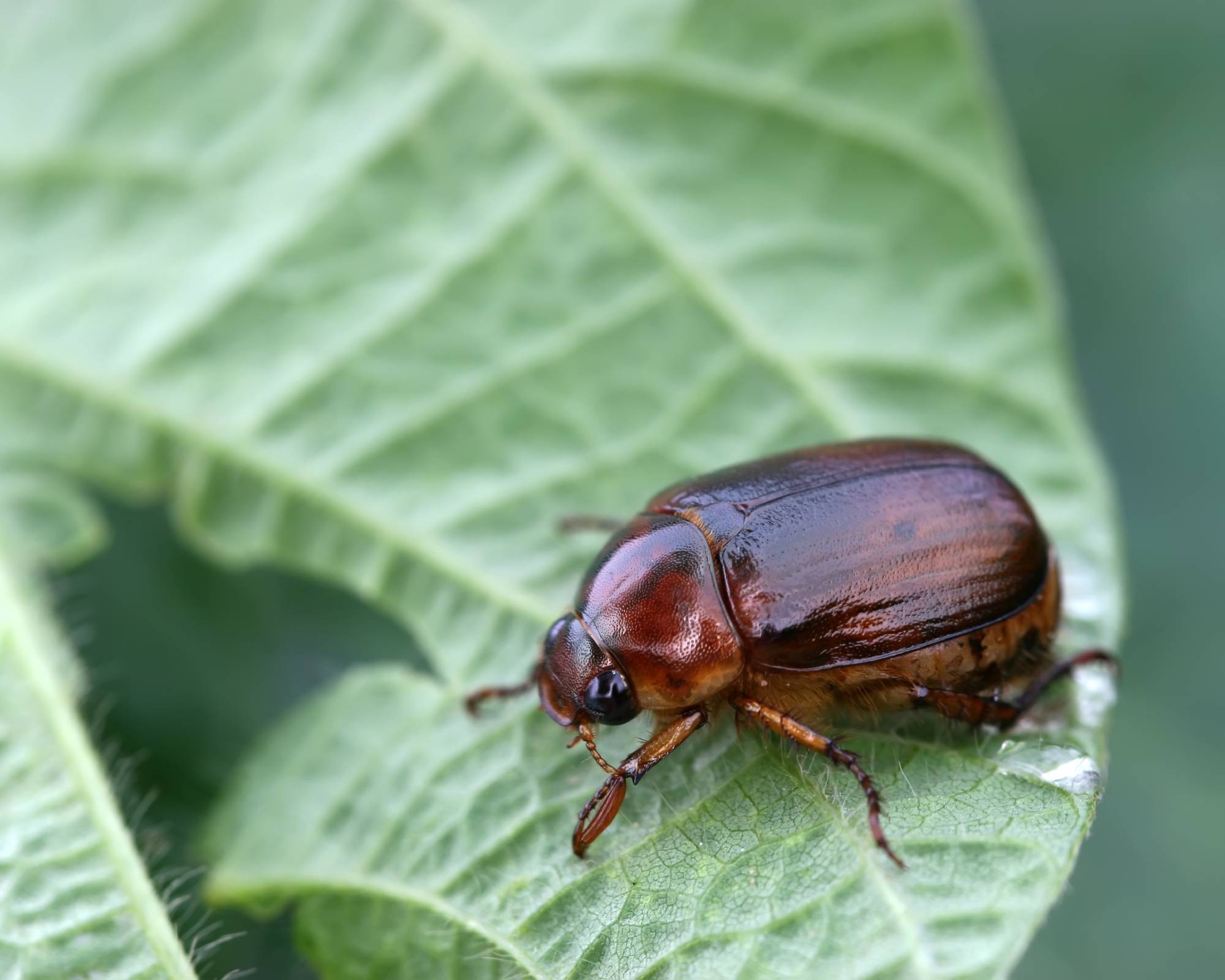
Brown June bug
(Image credit: lnzyx / Getty Images)
The June bug (or May beetles) most people know is the one that shows up at the porch light and won't leave. Its color runs reddish-brown, sometimes nearly black. It's round and hard-shelled, about the size of a thumbnail, anywhere from a half-inch to a full inch (1.3-2.5cm) long. And it flies like it's never tried before, loud and heavy, bouncing off the screen.
The brown June bugs do their feeding after dark. Through the day they're hunkered down in the soil or under leaf litter, waiting it out. Come nightfall they're up and moving, feeding, knocking into every lit window on the block. The adults go for tree and shrub leaves more than anything in the vegetable patch, and what they leave behind is just ragged little notches around the edges. It looks rough up close. The plant barely registers it, though, and the season carries on fine.
“June bug” is a loose name. It covers a whole batch of related scarabs, including a daytime metallic-green one that throws people off and makes them think Japanese beetle.
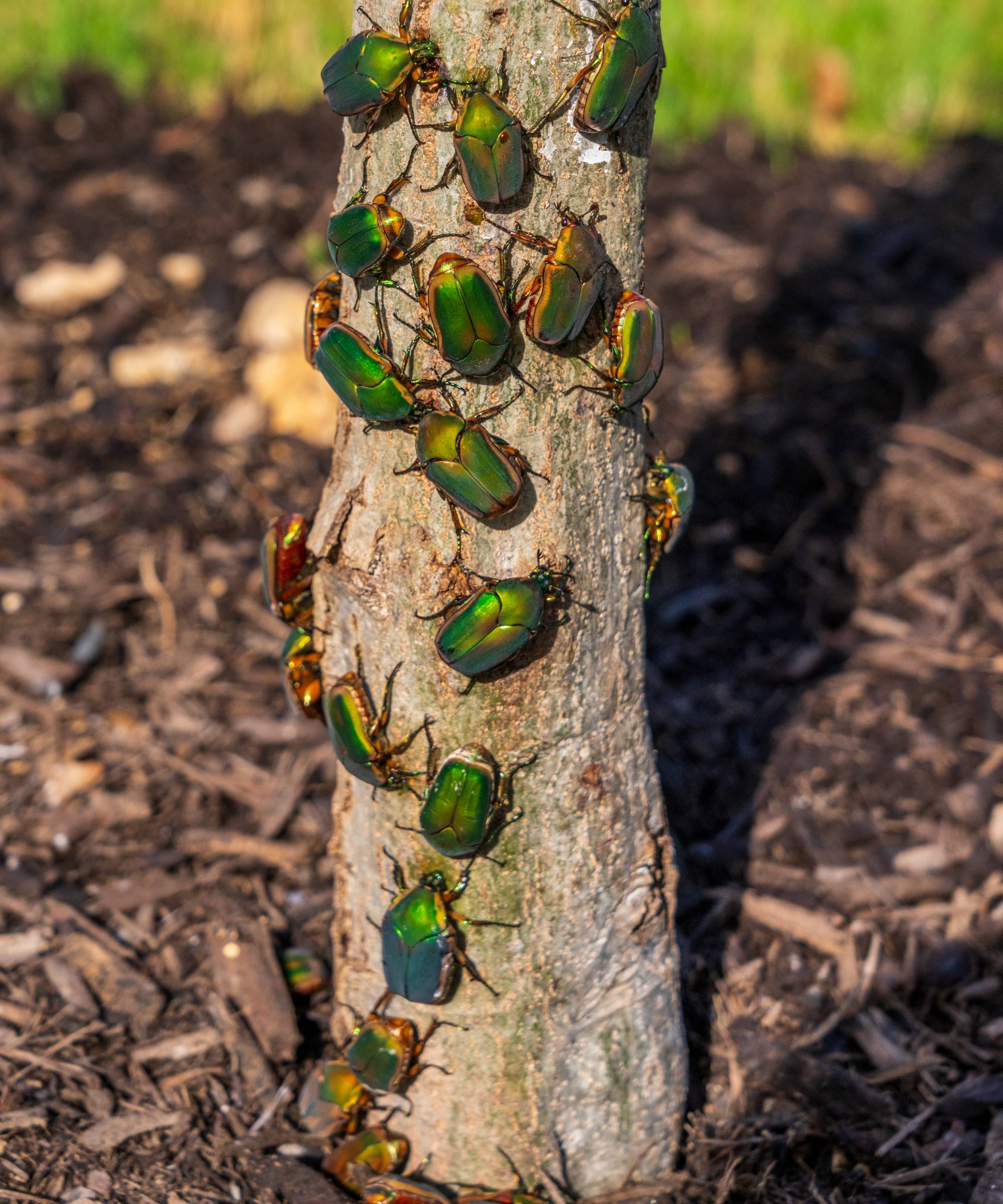
Green June bugs
(Image credit: BackyardProduction / Getty Images)
Japanese Beetles
(Image credit: Getty Images)
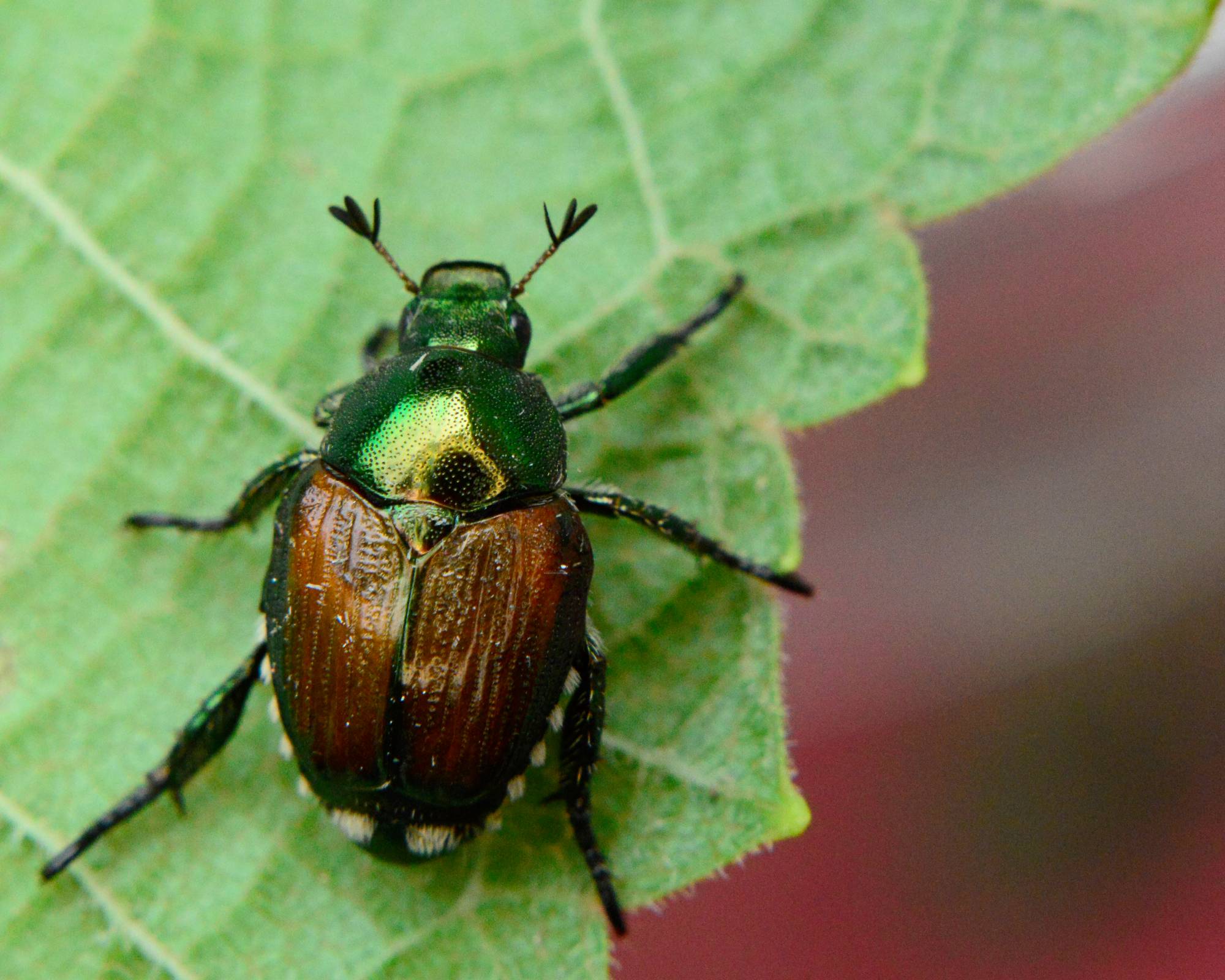
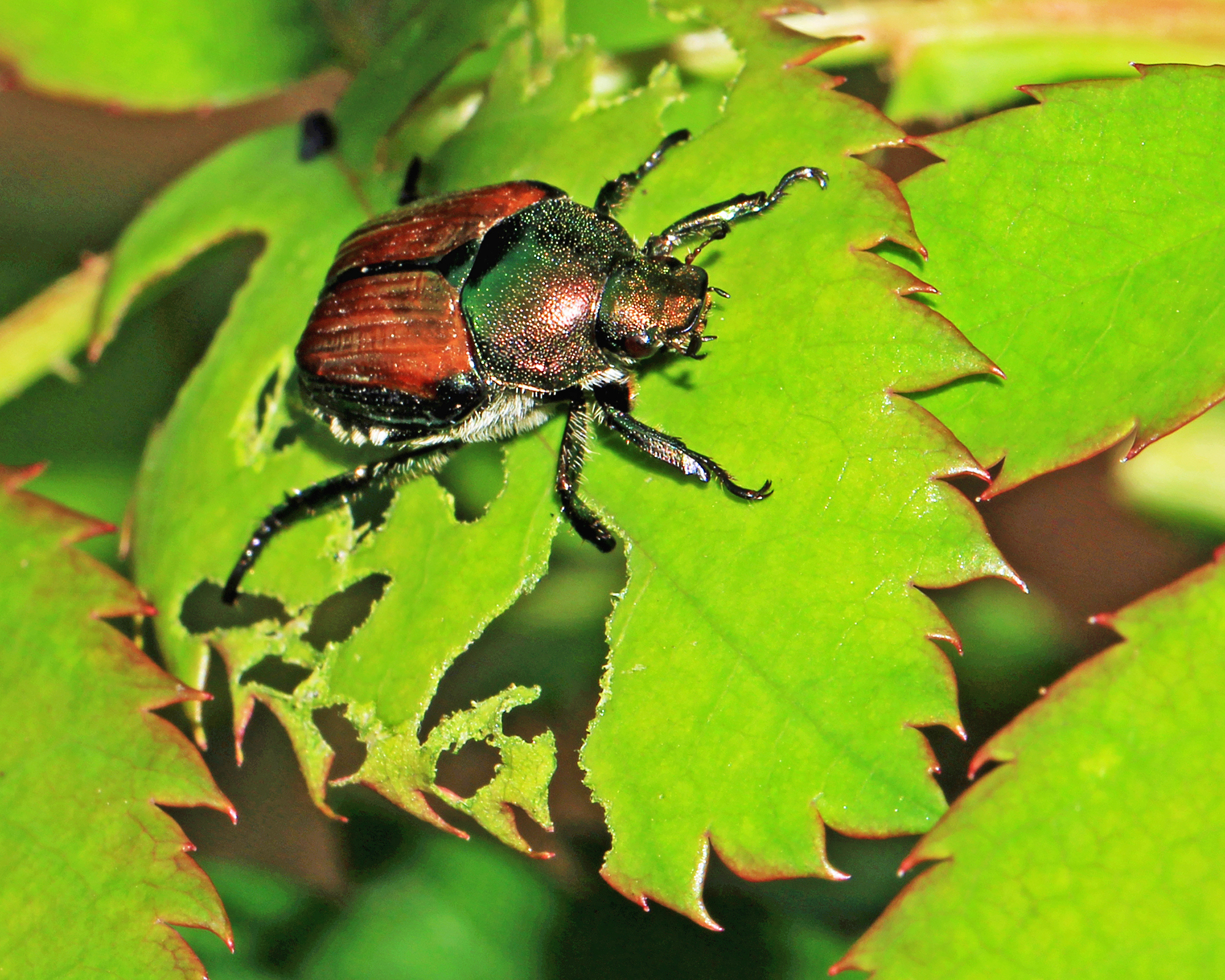
The Japanese beetle is the smaller of the two, around three-eighths of an inch (1cm), and far and away the flashier bug. Its head and thorax shine metallic green, and the wing covers turn a coppery bronze. Along each side of the body runs a row of little white tufts of hair, five to a side with two more at the tail. Those tufts are the giveaway. Nothing else in the garden presents them.
Where June bugs work alone and after dark, Japanese beetles do the reverse. They're out in the open in full daylight, happiest on a hot, sunny afternoon, and they almost never show up solo. Here's the nasty part: feeding beetles release pheromones and trigger plant stress signals that attract more beetles. So you spot two or three in the morning, write it off, and by evening there's a clump of thirty on the same branch. They snowball, and that's the whole problem with them.
Reading the Leaf Damage
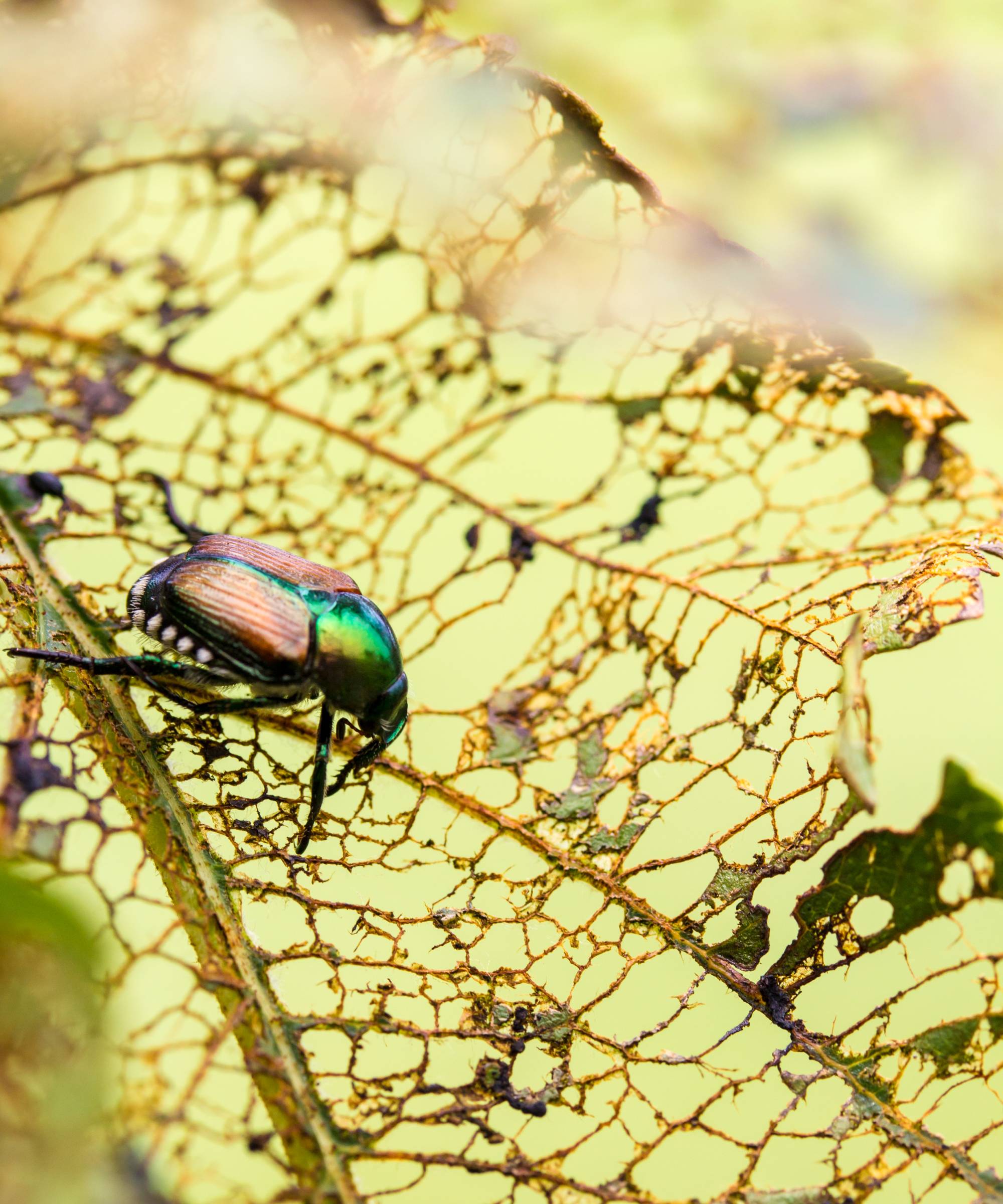
Japanese beetle and damage
(Image credit: elinedesignservices / Getty Images)
Truth is, the pests' leaf damage might tell you more than the appearance of the beetle does.
A Japanese beetle eats the soft green tissue between the veins and leaves the veins behind, so the leaf turns into a kind of brown lace, see-through where the green used to be. They also skeletonize petals and can scar fruit surfaces. They start at the top where the sun hits and chew their way down.
June bugs don't work like that. Theirs is messier, more random—chunks and notches torn in from the edges, scattered around, nothing like that fine skeleton.
What really sets them apart is appetite. A Japanese beetle will eat just about anything—roses, grapes, beans, the fruiting canes, something like 300 species all told. That range is why they turn up as a problem in so many gardens. June bugs are fussier and stick mostly to trees. And then there's what goes on underground, where the two finally line up.
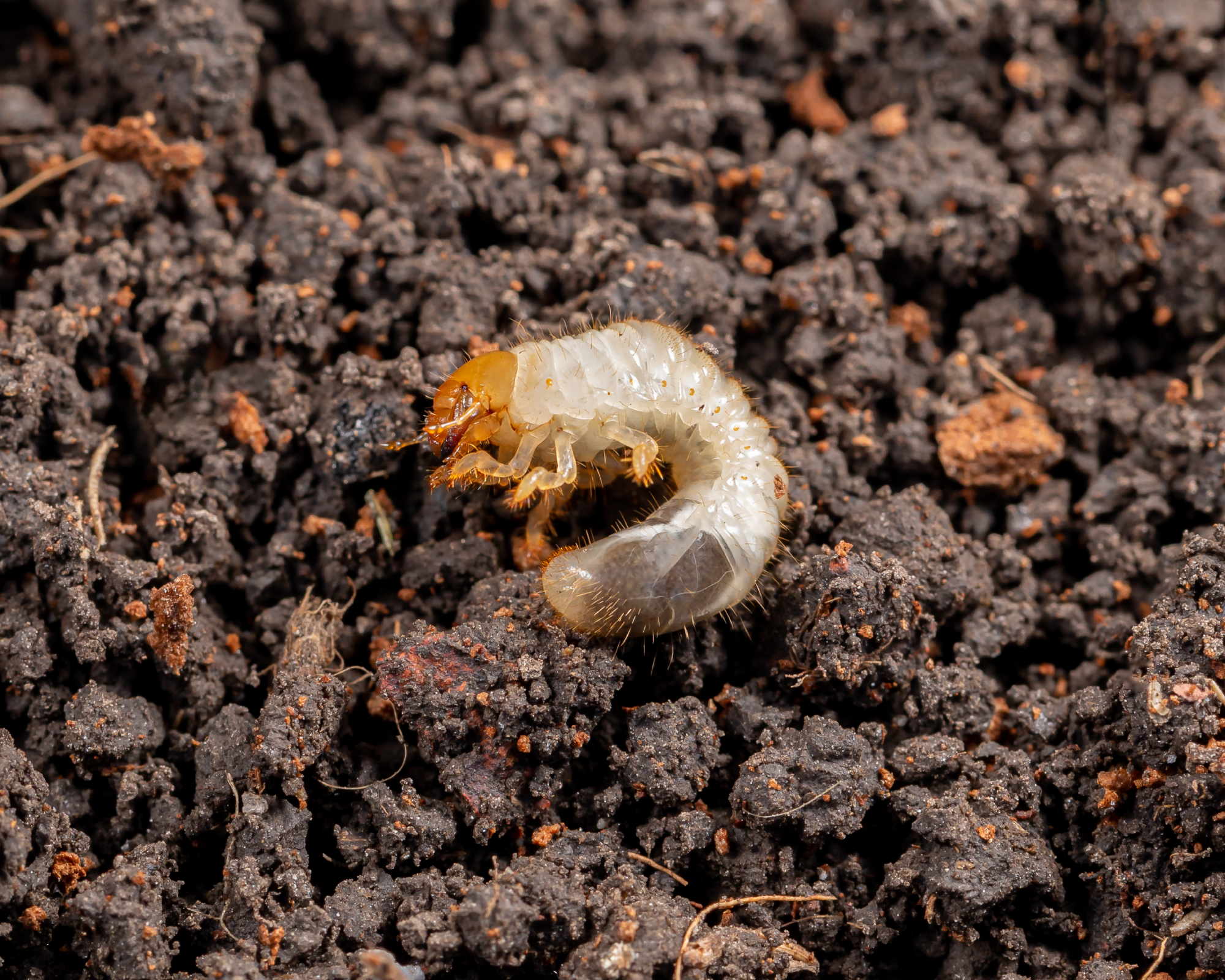
(Image credit: JJ Gouin / Getty Images)
Both lay eggs that hatch into those fat white C-shaped grubs, and the grubs sit there eating grass roots, killing the lawn in patches from below. Japanese beetle grubs tend to concentrate in turf grass, while June bug larvae often feed deeper on roots in soil.
Getting Rid of Japanese Beetles
(Image credit: Getty Images)
Because Japanese beetles cluster, hand-picking does real work here. Knock them into a jar of soapy water first thing in the morning, while the cool air still has them sluggish and slow to fly. Keep at it daily through the worst weeks and you stop the scent from building up and calling in reinforcements. One thing to skip is the pheromone bag trap. It pulls in far more beetles than it ever catches, so all you've done is bait your own yard.
Covering the plants they love can help as much as anything else. A floating row cover from Amazon draped over roses or beans for the few weeks beetles are active keeps them off the plant entirely. On anything too big or too numerous to cover, a neem oil spray from Walmart works as a repellent and feeding deterrent without wiping out every insect in the bed. And if the crowd gets ahead of you, an insecticidal soap from Amazon knocks them back, though spraying at dusk spares the bees doing their rounds. You can also make your own insecticidal soap!
Handling June Bugs
June bugs mostly aren't worth much fuss. The adults do surface damage at worst, and an established tree or shrub takes a few chewed leaves without any harm done. Cut the porch lights through their peak weeks and fewer of them gather near the house, since those lights are half the reason they show up. For most yards, leaving them alone is the right call.
The grubs are the part worth keeping an eye on, for both beetles. When they're feeding hard, the lawn goes spongy and yellow in patches, and the turf tugs up loose like it's barely holding on—late summer, mostly, is when you'll see it. Beneficial nematodes, watered into the soil, hunt the grubs down without any chemicals. A deep-watered, healthy lawn handles the light stuff on its own, too. But if the brown patches keep creeping outward, peel up a corner of sod and count what's under there before reaching for anything stronger.


















 English (US) ·
  French (CA) ·