

 9 months ago
283
9 months ago
283
PROTECT YOUR DNA WITH QUANTUM TECHNOLOGY
Orgo-Life the new way to the future Advertising by AdpathwayPine cone ginger lighting can be tricky! It’s a tropical plant, but in the wild, it grows under the cover of jungle canopies. Getting its at-home conditions right is directly correlated to a thriving plant. Experienced gardener Sarah Jay has tips on how to provide the right light for your ginger.

Written by Sarah Jay Last updated: December 7, 2025 | 3 min read
Zingiber zerumbet is a stunning and interesting ornamental plant native to the tropical forests of Asia. It prefers moist areas near waterfalls and other waterways, and thrives in the shade of large trees that form the forest canopy. This fact is key to providing the right pine cone ginger lighting.
In summer, this plant, also known as shampoo ginger, grows a green flower spike that produces small white blooms. As these sparse flowers fade, a bright red inflorescence remains. It’s at this point that the spike secretes that shampoo-like substance.
Whether you’ve decided to cultivate this plant outdoors in your shade garden or indoors throughout the year, it’s not hard to mimic its natural conditions. While the lighting varies depending on where you grow it, conditions should remain consistent throughout the year.
Pine Cone Ginger Lighting
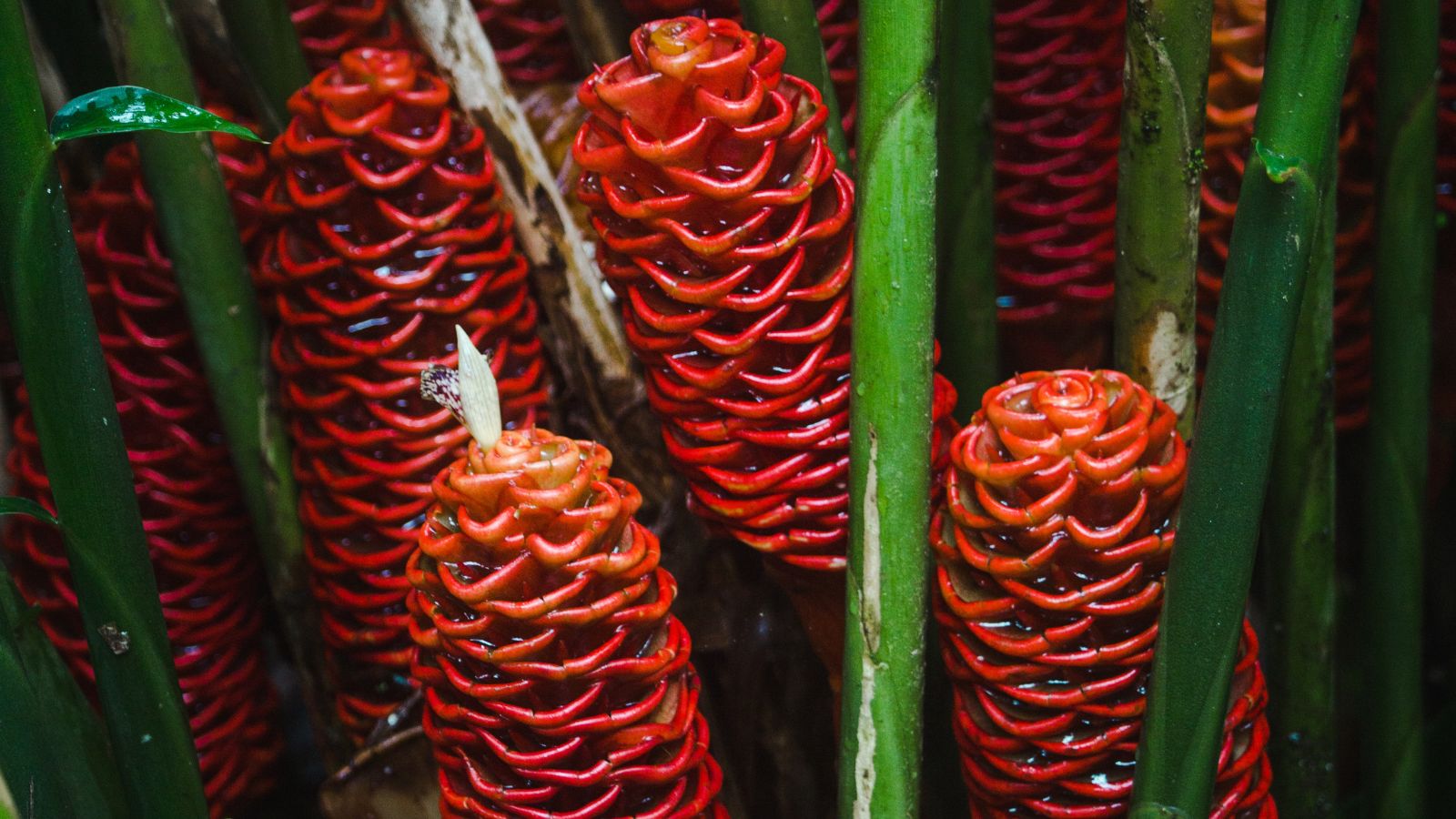 These plants grow naturally in tropical forests.
 Before we touch on the particulars of how to provide light for this perennial, let’s discuss the specifics of its lighting in nature. The plant is hardy in zones 8 through 11, and typically dies back in colder weather in zone 8. Anywhere there is a freeze, the plant’s leaves will die back.
Provide partial shade for your shampoo ginger. This is what it gets in the wild. Roughly four to six hours of sunlight per day is enough. Dappled sun through the trees and bright indirect light work too. Because this is a low-growing plant, it’s totally ok to shade it slightly. But it does need access to some light.
Indoor Lighting
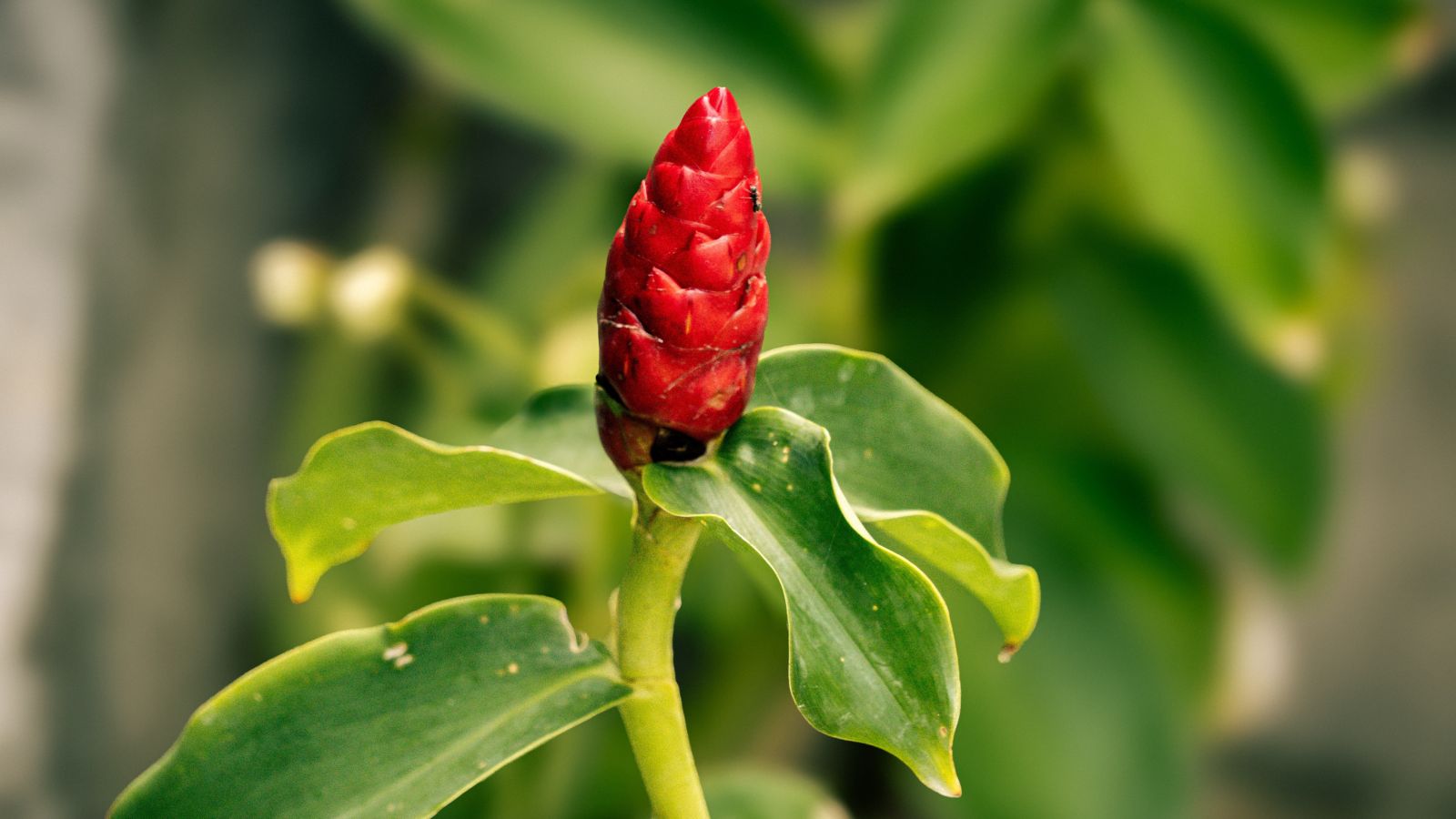 Use grow lights if you don’t have the right indoor lighting conditions.
 When tropical plants come indoors, sometimes their needs shift, and pine cone ginger lighting provides no exception to this rule. While plants outdoors can handle some direct sun, it’s better to keep indoor ones in bright, indirect light. There are multiple ways to do this.
If you have access to a sunny south or west-facing window, simply place your shampoo ginger nearby, offsetting it from the direct line of sunlight. If you don’t have room to do this, use a sheer curtain to diffuse the sun’s rays.
If you don’t have access to sunlight, use a grow light. Keep the pine cone ginger container out of direct light, and set it off to the side of the grow light. More sun-loving plants can sit underneath, and Z. zerumbet can sit next to them.
Outdoor Lighting
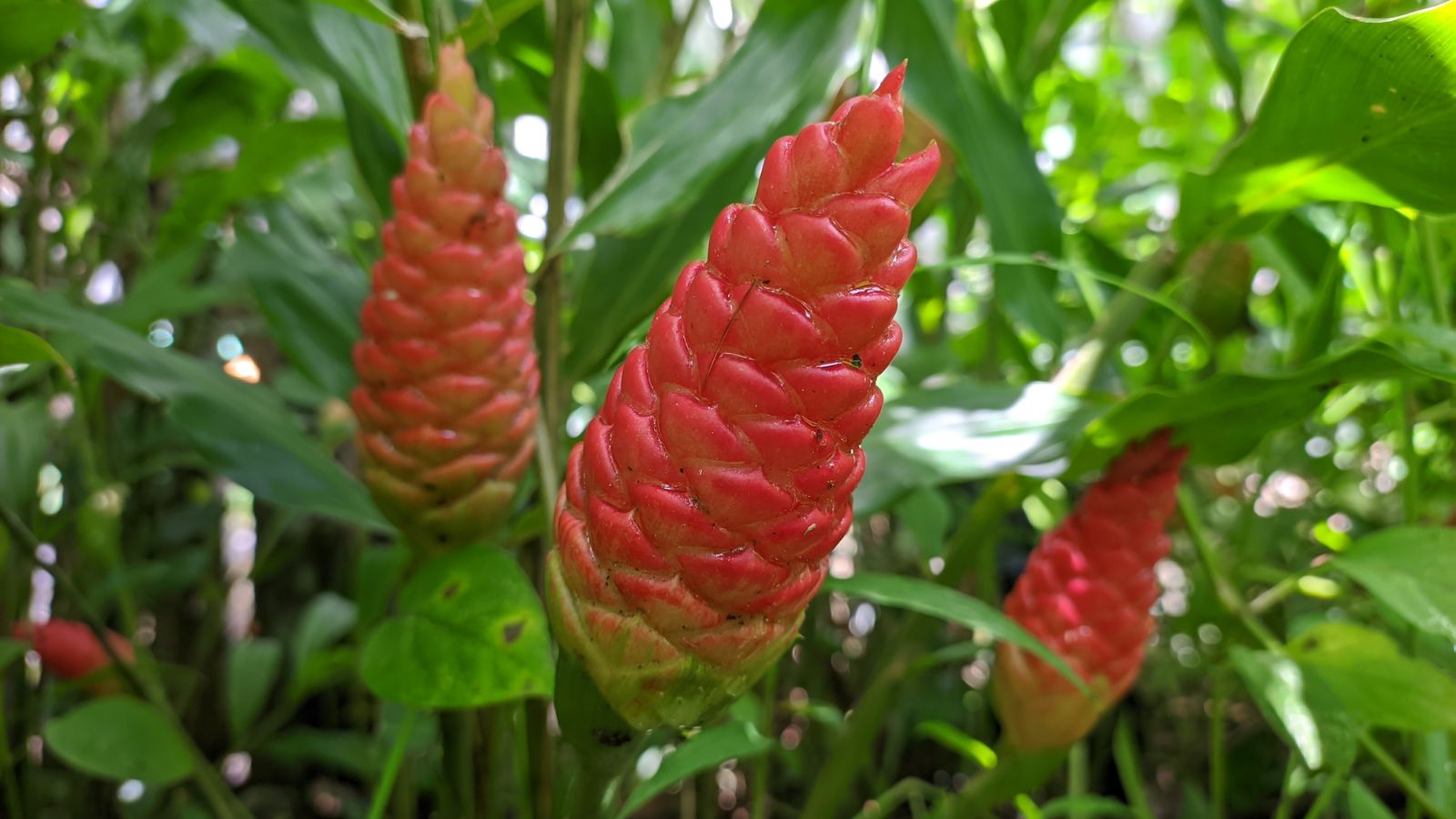 Getting the right pine cone ginger lighting outdoors will deliver many flowers.
 Outdoors, it’s much easier to get pine cone ginger lighting right. Find an area of the garden that gets bright light throughout the day, but no more than four to six hours of direct sunlight. In areas that have hot summers, keep the plant out of direct sunlight. In milder areas, some direct sun is fine.
If your ginger is potted, keep the container under the cover of larger trees. If there are no trees in your yard, place it close to larger structures where it won’t get more than six hours of sun per day. If this isn’t possible, a shade canopy is a good idea.
One note about outdoor ginger plants in containers: regardless of where you live, bring your plant indoors once temperatures are consistently below 50°F (10°C). Then adjust your lighting to bright and indirect.
Lighting in Dormancy
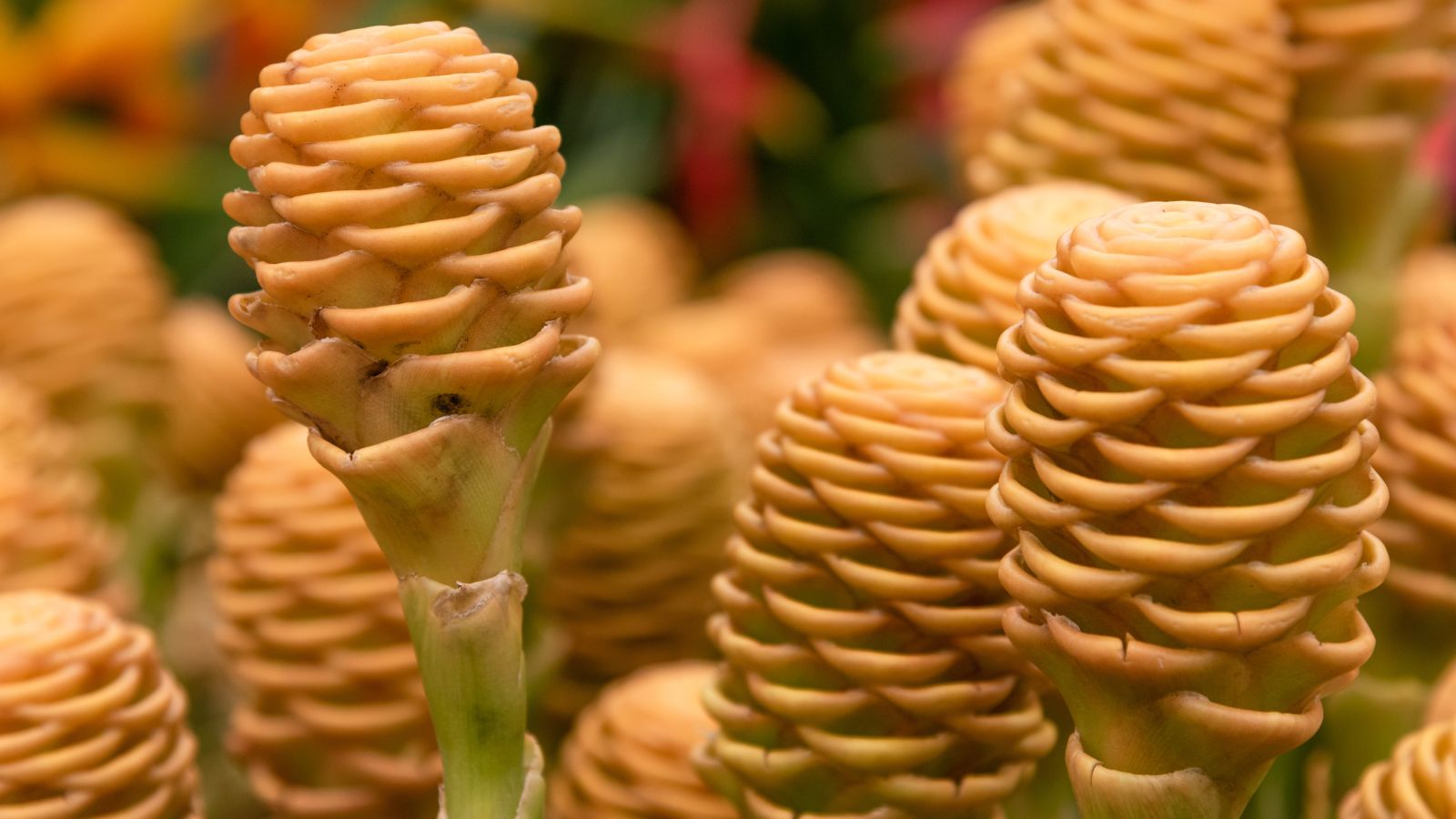 Store the roots in a protected area over winter.
 If you grew your plant outdoors in the garden ground outside its hardiness range, you should remove the rhizomes and store them through the colder seasons. Wait for the leaves to die back, then remove the roots from the ground and store them in paper bags with dry peat, coco coir, or sawdust.
At this time, prevent light from reaching the rhizomes. They are dormant, and light can push them back into active growth, especially if they’re stored in temperate conditions. This is a more particular aspect of pine cone ginger lighting that can easily be missed.
Key Takeaways
Pine cone ginger lighting is not hard, and only varies slightly depending on the location and time of year you’re growing it. Remember these basic tenets to have a thriving source of shampoo every year:
- In the wild, these plants prefer partial shade.
- Outdoors, partial shade to bright indirect light is best. In warmer areas, indirect lighting prevents damage to this ginger plant’s supple leaves.
- Indoors, bright indirect light is key.
- In dormancy, remove the rhizomes from in-ground gardens, and store them so they can’t access light.














 English (US) ·
  French (CA) ·